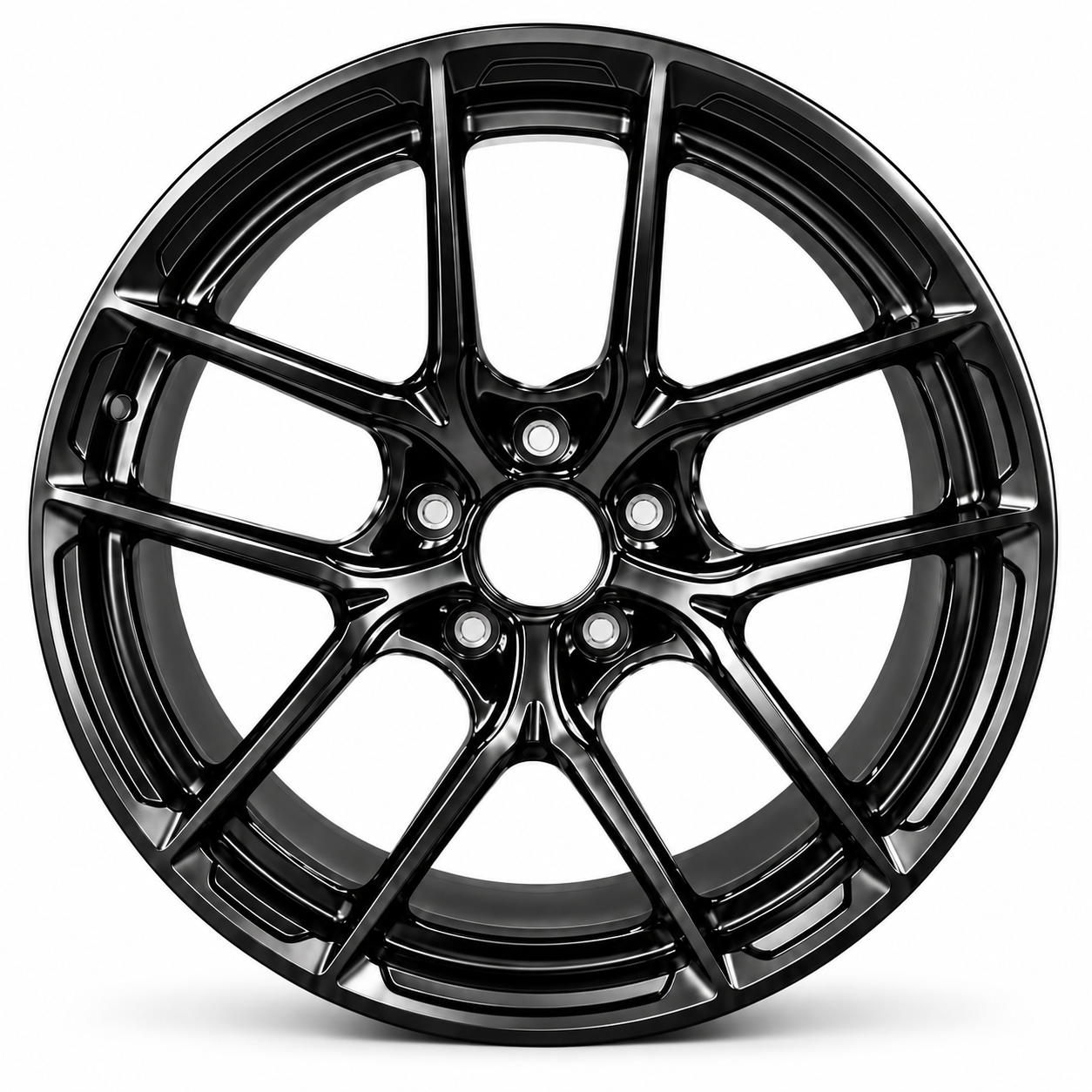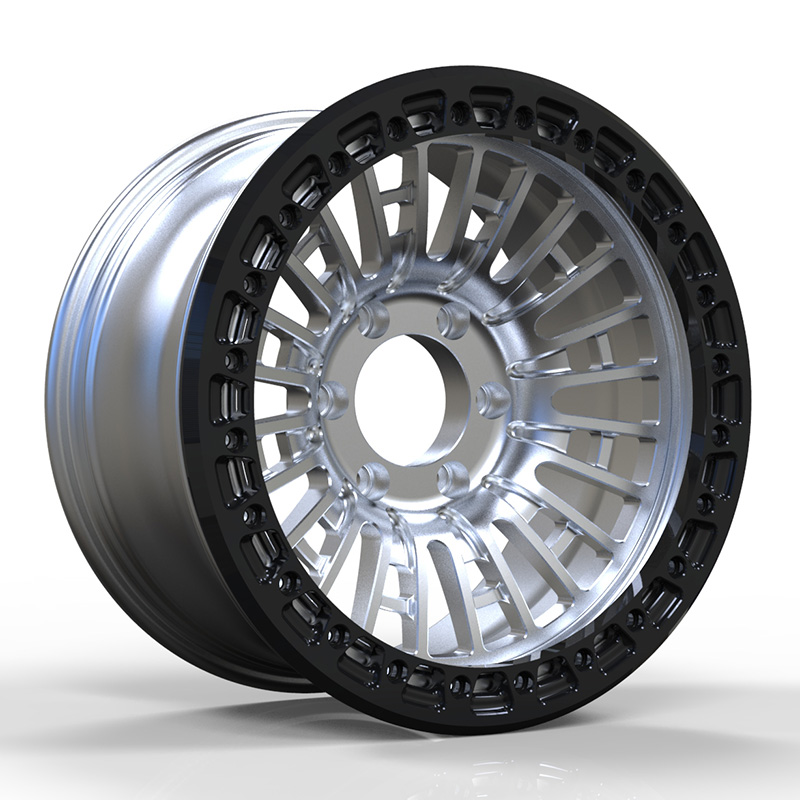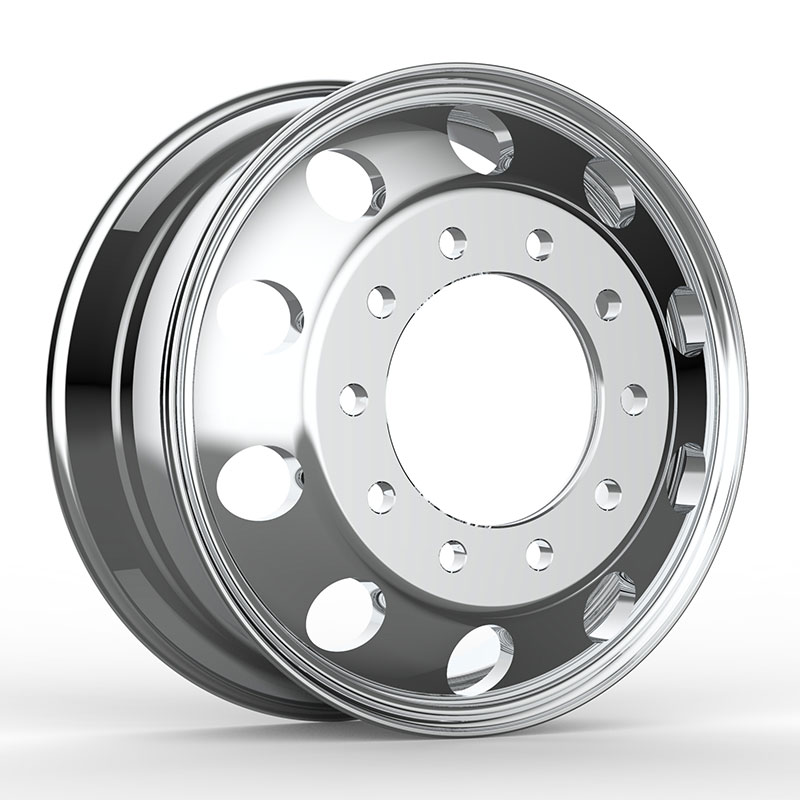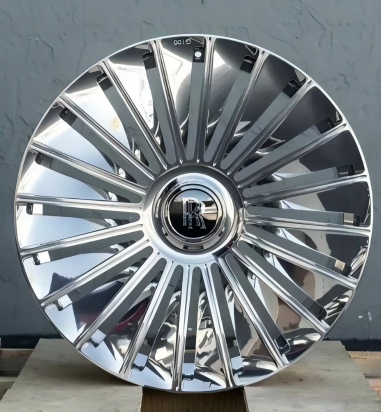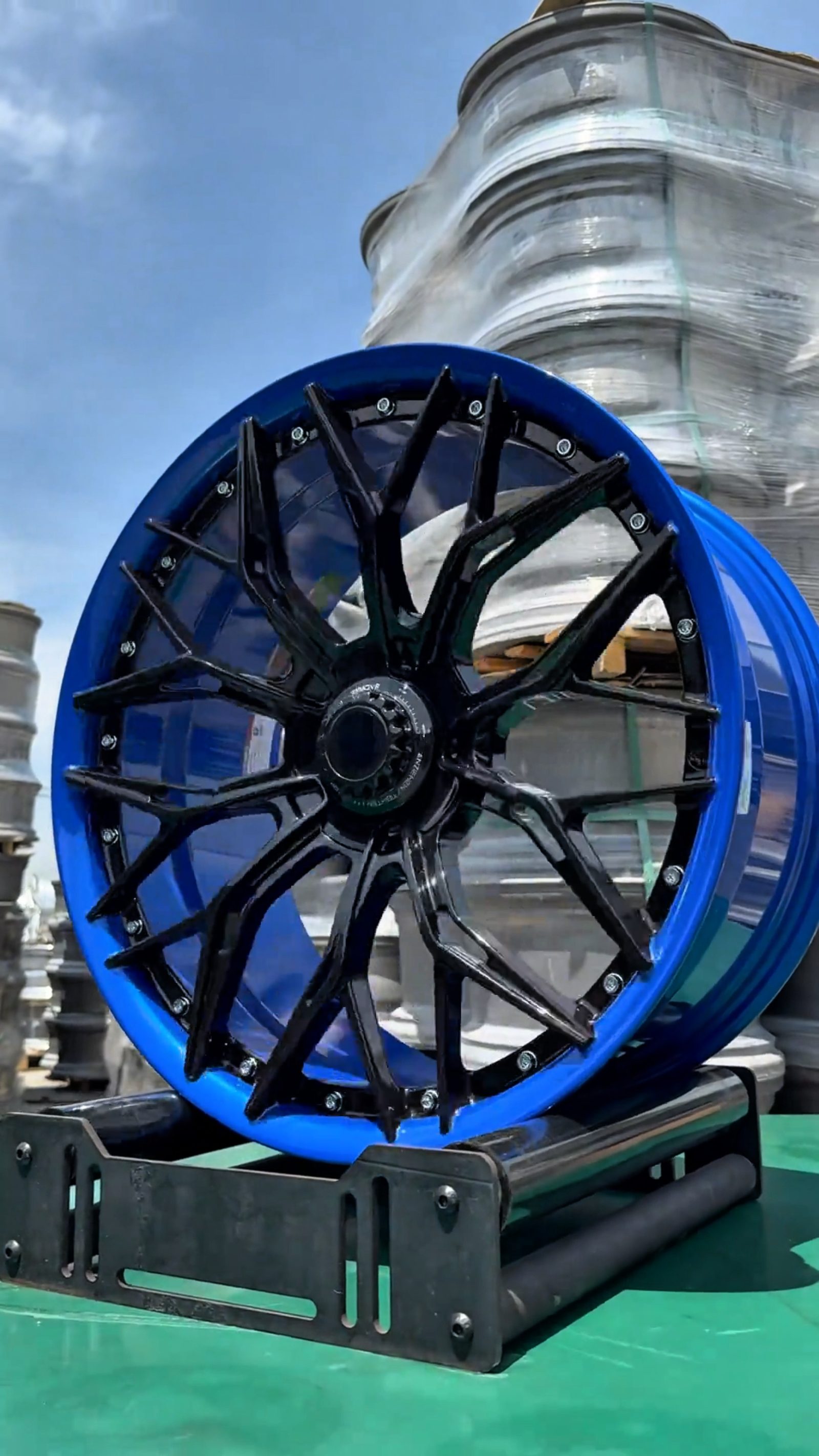
Concave forged wheels are stronger than cast designs and at least as strong as flat-face forged designs of the same weight, provided the spoke has been engineered for the load. The material advantage comes from forging rather than from the concave shape, because a forged part has an aligned grain structure and no casting porosity. The shape then decides where that strength has to be concentrated, which is what makes spoke design the real variable in a deep concave wheel.
This is a question that deserves a precise answer, because the market is full of both overclaiming and unnecessary worry. Some suppliers imply that any forged wheel is unbreakable, which is not true of any wheel. Others imply that a deep concave design must be fragile, which is equally untrue when the design is done properly. What follows is the technical explanation of where the strength actually comes from, how it is measured, and how to tell a well-engineered concave wheel from one that has simply been made to look deep.
It is worth separating three properties that buyers tend to merge into the single word strength: fatigue resistance, impact resistance, and stiffness. Each behaves differently, each is tested differently, and a wheel can be excellent in one and only adequate in another. The one-piece monoblock forged range is a useful reference point for how all three are balanced in a single construction.
What Strength Actually Means for a Road Wheel
Fatigue resistance is the ability to survive an enormous number of moderate load cycles, which is exactly what a wheel experiences over a hundred thousand kilometres of cornering, braking, and road imperfections. Wheels rarely fail from a single overload in normal use; they fail from a crack that starts at a stress concentration such as a spoke root, a bolt seat, or a machined transition, and grows slowly until the section can no longer carry the load. This makes fatigue the property that matters most in service, and it is the property that forging improves most directly.
Impact resistance is the ability to absorb a sudden event such as a pothole edge, a kerb strike, or road debris at speed. This is dominated by the ductility of the material and by the design of the bead seat, the lip, and the spoke where it meets the rim. A wheel can be extremely fatigue-resistant and still crack from a severe impact if the barrel is too thin or the lip profile concentrates stress. This is why impact testing exists as a separate standard and why our internal control plan adds thirty-degree and ninety-degree impact and deformation checks on top of the published requirements.
Stiffness is the resistance to deflection under load. A stiff wheel keeps the tyre's contact patch where the driver expects it, which is what produces precise steering and consistent behaviour in a corner. A stiff wheel is not necessarily a strong one and vice versa, but in practice a well-designed forged wheel is both, because the same material freedom that allows a thin section also allows a thicker one where the bending moment is highest. A wheel that is strong but flexible will not fail, and the customer will still complain about it.
| Property | What It Controls | How It Is Evaluated |
|---|---|---|
| Fatigue resistance | Long-term durability under repeated cornering and road loads | Radial and cornering fatigue rig testing |
| Impact resistance | Survival of potholes, kerbs and debris strikes | Drop impact tests at defined angles, plus deformation measurement |
| Stiffness | Steering precision and consistency of the contact patch | Deflection measurement under cornering load |
| Load rating | The maximum static or dynamic load the wheel may carry | Calculated and verified, then stated per wheel for the fitment |
Cast, Flow-Formed, and Forged: The Material Difference
Casting produces a wheel by filling a mould with molten aluminum. The metal solidifies from the outside inward, and the last region to solidify is left with shrinkage porosity and a random grain orientation. Those pores act as crack initiation sites under fatigue loading, which is why a cast wheel must be made with thicker sections to reach the same durability. The consequence is visible on a scale: a cast wheel of a given size is heavier than a forged one, and the gap widens as diameter increases because the rim section grows too.
Flow forming is a genuine improvement to the barrel. A cast centre is mounted and the rim is spun under rollers, which compresses and realigns the material in the barrel and removes a substantial amount of porosity there. This produces a light, strong rim section at reasonable cost, which is why flow-formed wheels occupy the mid-market so comfortably. The limitation is that the centre remains as cast, and on a concave design the centre and the spoke root are exactly where the highest stresses occur.
Forging begins with a solid billet that is pressed under high force. The material flows to fill the die, which refines the grain structure and aligns it with the direction of flow, and because nothing melts there is no shrinkage porosity to inherit. The resulting part has higher fatigue resistance and better toughness per kilogram than either alternative, which is what allows a designer to machine a spoke thinner without reducing durability and to place the remaining material exactly where the load path runs.
Two forging alloys dominate the market, and the choice has consequences. 6061-T6 offers an excellent balance of strength, weight, and formability and is the workhorse of performance wheel production. 7075 is stronger and stiffer at the same weight but is more demanding to forge and machine, which is why it appears mainly in high-load applications. We have been producing 7075 forged aluminum wheels in volume for overseas customers, which is a capability worth confirming before a buyer specifies the alloy for a heavy or extreme-duty programme.
Are Concave Forged Wheels Stronger? Depth Versus Spoke Design
A concave spoke is a longer structural member than a flat one, and a longer member experiences a greater bending moment for the same applied load. That is the entire basis of the concern about concave wheels, and it is a real engineering issue. The mistake is to conclude that the issue cannot be solved. It is solved by designing the spoke as a variable-section beam, with a thicker root where the moment is highest, a tapered middle section that follows the decreasing load, and a generous blend into the hub and the rim so that stress does not concentrate at the transitions.
When that is done, the answer to are concave forged wheels stronger becomes clearer. At equal weight, a properly engineered concave forged wheel can exceed the fatigue performance of a flat-face design, because the designer is free to put material where it is needed rather than distributing it evenly for manufacturing convenience. At equal appearance, a forged concave wheel is considerably stronger than a cast concave wheel, because the cast version has to compensate with extra thickness everywhere and still carries its casting porosity through the spoke root.
The real risk in the market is not concave geometry; it is concave geometry produced from a generic pattern. A design that was originally a flat-face wheel, modified to look deeper without re-engineering the spoke section, will have exactly the problem buyers fear. That is why the question to ask a supplier is not how deep the wheel is, but what the spoke root thickness is, how the section tapers, and whether the wheel was designed for the specific load rating of the vehicle it will be sold into. If a supplier cannot answer, the depth is decorative.
Multi-piece construction changes the arithmetic in a useful way for very deep designs. Because the lip and the barrel are separate parts, lip depth can be increased without lengthening the spoke at all, which means the customer gets a more dramatic appearance with no penalty to the spoke's structural behaviour. The SSD super concave range is built around this idea: obtain the visual result from the assembly rather than from a spoke section that has been pushed beyond its sensible limits.
How Strength Is Actually Proven
Wheel strength is proven by testing against recognised standards rather than by assertion. The references used in this industry include SAE J2530, JWL and JWL VIA, TUV, DOT, and ECE R124, depending on the destination market. Each of them defines how a wheel is loaded, how many cycles it must survive, and what constitutes a failure. A test report issued against a specific model number is the only meaningful evidence a buyer can hold, and it should be requested before the order rather than after.
- Material verification. Confirm the alloy and the heat treatment condition from a certificate, not from a description.
- Radial fatigue testing. A rotating bending load applied until the wheel either reaches the required cycle count or fails.
- Cornering fatigue testing. A side load applied through the rim to simulate sustained lateral forces.
- Impact testing. A defined mass and drop height at defined angles, followed by a deformation measurement.
- Air-tightness testing. Pressure retention over time, which also validates the bead seat and any multi-piece joint.
- Dimensional verification. Backpad, hub bore, bolt circle, and runout measured against the approved drawing.
Our own control plan is deliberately stricter than the published minimums, and includes additional thirty-degree and ninety-degree impact and deformation checks alongside the standard fatigue and air-tightness routines. The system certifications behind that plan are ISO 9001, ISO 14001, ISO 45001, and IATF 16949, and the plant holds 12,000 square metres of production space in Ningbo with more than one hundred staff. Buyers who want to see the boundary of what a forged concave wheel can carry should look at our military wheel range, where the load requirements leave no room for decorative engineering.
Where Strength Claims Go Wrong
The most common dishonest claim in the wheel market is an unqualified comparison: this wheel is stronger than that one, with no reference to weight, size, or construction. Strength at equal mass is a meaningful comparison. Strength at equal appearance is a meaningful comparison. A blanket claim that one process is always stronger than another is not, because a heavy cast wheel can easily outperform a light forged one in absolute terms while being far worse as an engineering solution.
The second common error is confusing stiffness with strength in a sales conversation, which leads customers to believe that a stiff wheel cannot crack and that a strong wheel must feel precise. Those are different properties and they are addressed by different design decisions. A dealer who understands the distinction can ask a supplier the right question, and the answer will tell them more about the product than any marketing material will.
- Claims without a weight reference. Strength comparisons are meaningless unless the mass, size, and construction are stated.
- Unbreakable language. No road wheel is unbreakable, and any supplier who implies otherwise is not being straight with you.
- A report for a different model. Test evidence must carry the same model number as the wheel you are buying.
- Load rating from a lighter application. A rating is only valid for the exact fitment it was verified against.
Strength questions a buyer should be able to answer from the file:
Which alloy, and in what heat treatment condition?
What is the stated load rating for this exact fitment?
Which fatigue and impact tests were run, and at what model number?
What is the spoke root thickness and how does the section taper?
Selecting a Construction for a Heavy or Extreme Application
When the vehicle is heavy, the payload is variable, or the terrain is punishing, the specification conversation changes. Load rating stops being a formality and becomes the first decision, and the appearance is adjusted to suit it rather than the other way around. Buyers who work in this order end up with wheels that survive; buyers who work in the opposite order end up explaining a failure to a customer who trusted their recommendation.
Start by establishing the worst case rather than the typical case. A three-row SUV carrying seven adults and luggage, a pickup with a loaded bed and a trailer, or an electric vehicle with a full battery and a family aboard is the scenario the wheel has to be rated for. Once that number is fixed, the designer knows how much material must remain in the backpad and the spoke root, and only then does it make sense to discuss how deep the concave profile can be without crossing that line.
The next decision is construction. A one-piece forged wheel concentrates strength in a single continuous structure, which suits heavy applications because there is no joint to inspect or maintain and no sealant that can degrade. A multi-piece wheel distributes the structure across assembled parts, which brings flexibility and repairability at the cost of additional assembly steps and a longer inspection routine. In a load-limited application the monoblock is usually the safer starting point, and a multi-piece alternative is justified only when the customer's priority is appearance or serviceability.
Materials follow the same logic. Where 6061-T6 comfortably meets the target, there is no reason to specify 7075; the extra strength is only useful if it solves a real problem, and it brings a more demanding forging and machining process with it. Where the load target is genuinely high, or where the fitment leaves little room for a bulky spoke, 7075 earns its place. Our work on high-load forged wheels for armoured and special-purpose vehicles is a good illustration of where that decision actually matters, because those applications leave no margin for a specification that was chosen for appearance.
Finally, spell out the duty cycle. A wheel that spends its life on smooth highways is loaded differently from one that repeatedly crosses unsealed roads, and a duty cycle described in writing lets the manufacturer justify a section thickness rather than guess at it. Buyers who provide this information consistently receive better-engineered wheels, because the design is then built around data instead of around a photograph of a similar car.
There is one more variable that matters in heavy applications and is almost always overlooked: the tyre. A tyre with a load index below the vehicle's requirement will be the weak point long before the wheel is, and a dealer who specifies a strong wheel and a marginal tyre has solved the wrong problem. Check the load index on the tyre sidewall against the axle load of the heaviest configuration, and treat the wheel and the tyre as a single load-carrying system rather than as two separate purchases.
Hardware deserves the same attention. Studs or bolts carry the entire connection between wheel and hub, and their grade, length, and thread engagement are part of the load path. Reusing worn or incorrect fasteners on a heavy vehicle is a common cause of stud failure, and it is a failure that gets blamed on the wheel in almost every case. Specify the fastener grade alongside the wheel, supply it with the set, and state the torque figure in writing.
FAQ: Are Concave Forged Wheels Stronger?
These are the strength questions we answer most often from dealers, importers, and buyers specifying a forged concave wheel for a heavy or high-performance application.
Q1. Is a forged wheel always stronger than a cast wheel?
At equal weight, yes, consistently, because the forged part has no casting porosity and its grain structure resists fatigue better. In absolute terms a very heavy cast wheel can still be stronger than a very light forged one. The useful comparison is always at equal mass, and that is the question worth putting to a supplier.
Q2. Does deeper concave always mean a weaker wheel?
No. Depth increases the bending moment on the spoke, but the designer can respond with a thicker root, a different taper, and a larger blend radius. A deep design becomes weak only when the spoke section is not re-engineered for the geometry, which happens when a flat-face pattern is modified rather than designed from the start.
Q3. What is the difference between strength and stiffness?
Strength is the load the wheel can carry before it fails. Stiffness is how much it deflects while carrying that load. A strong wheel that flexes will feel vague to the driver even though it is safe, and a stiff wheel can still crack under an impact it was not designed for. Both matter, and they are addressed by different design decisions.
Q4. Which alloy should I specify for a heavy SUV or EV?
6061-T6 covers the majority of applications comfortably. Where the load target is high or the fitment is extreme, 7075 offers more strength and stiffness at the same weight, at the cost of a more demanding manufacturing process. The decision should be made against the measured load rating rather than the vehicle type.
Q5. Can a repaired forged wheel still be trusted?
That depends entirely on what was repaired and how. A cosmetic lip re-cut on an otherwise sound wheel is normally acceptable. A wheel with a crack in the spoke or the barrel should be replaced rather than welded, because a repair in a load-bearing region cannot restore the original fatigue behaviour. Any repair should be assessed against the drawing before the wheel returns to service.
Specifying Strength You Can Document
The practical conclusion is that strength should be specified rather than assumed. Decide the load the wheel has to carry, ask for the alloy and the heat treatment condition, request test evidence at the correct model number, and confirm that the spoke section was designed for the geometry rather than adjusted to it. Do that and a deep concave wheel is a rational, durable choice; skip it and you are buying an appearance and hoping the structure follows.
RETA manufactures forged aluminum wheels in Ningbo, China, covering forging, rotary forming, multi-axis CNC machining, heat treatment, finishing, and fatigue and impact testing on a single 12,000 square metre site, with 7075 forged aluminum in volume production and certification to ISO 9001, ISO 14001, ISO 45001, and IATF 16949. If your programme needs a documented answer to are concave forged wheels stronger for a specific vehicle, send us the load target and we will reply with the numbers rather than the adjectives.