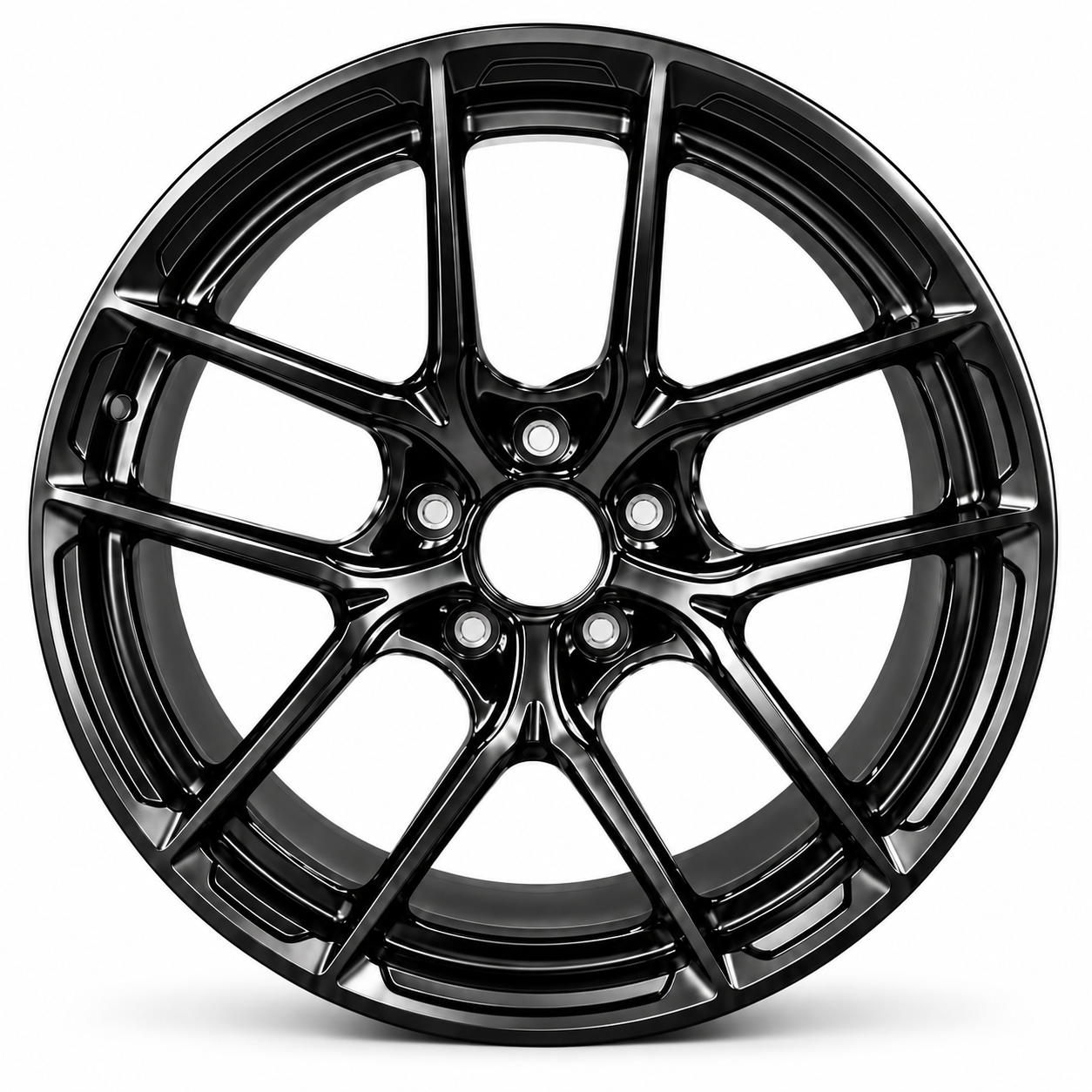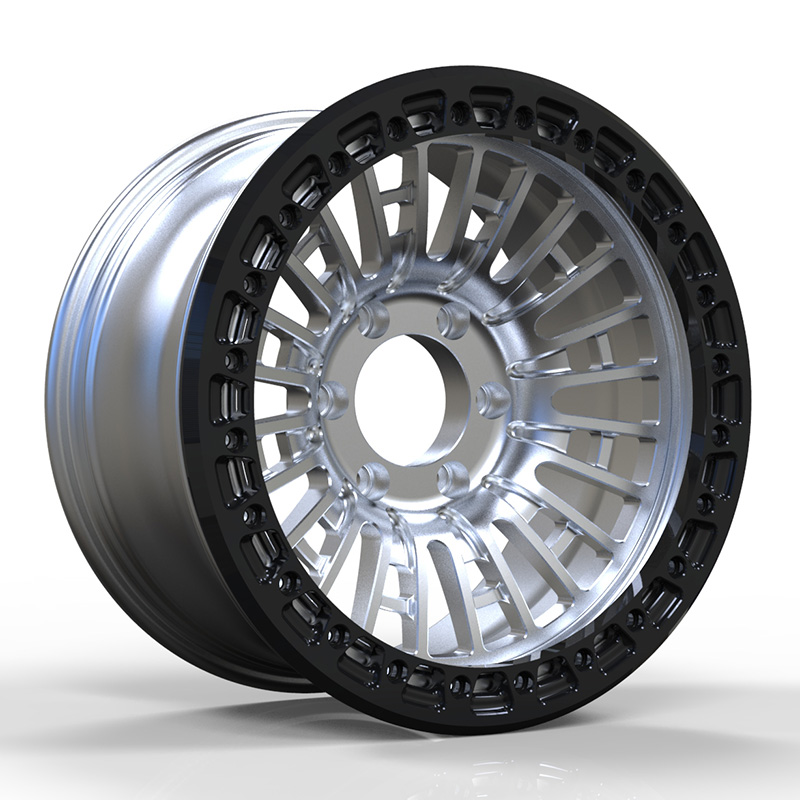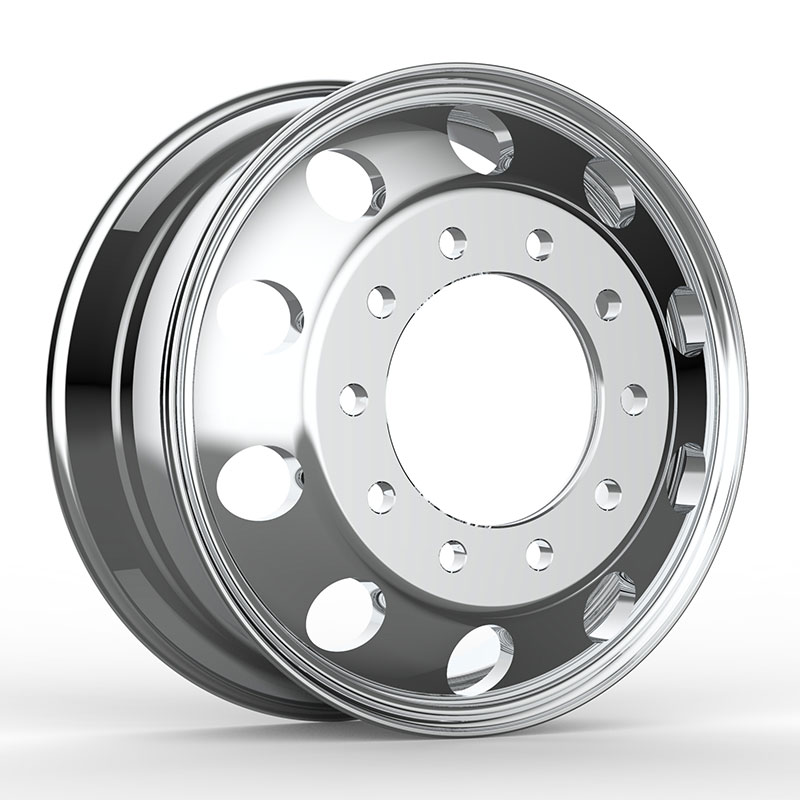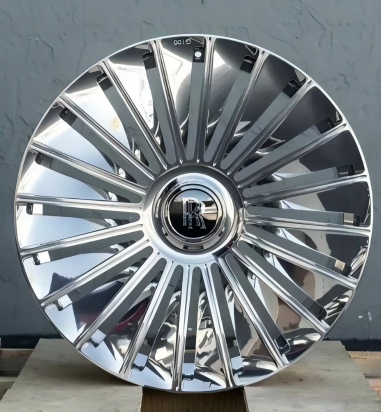
A concave forged wheels shop California buyers work with should be able to confirm four things before a purchase order is placed: the load rating for each specific fitment, the offset and backpad against a real vehicle, the finish choice against the local coastal climate, and the lead time including customs clearance. California is a demanding market for wheels in ways that are not obvious from a specification sheet, and most of the costly mistakes we see from West Coast dealers come from four checks that were never made.
The state combines three conditions that are unusual together. It has one of the largest and most style-driven aftermarket wheel markets in the world, a long coastline with salt-laden air that attacks machined and polished finishes, and an inland mountain and canyon road network that puts genuinely high lateral and thermal loads through a wheel. A dealer serving customers in Los Angeles, Orange County, San Diego, and the Bay Area may be selling to all three environments within a short drive, and the right specification differs between them.
This article sets out what to verify, in the order that reduces risk most efficiently. It is written from the perspective of the manufacturing side of the trade, based on more than a decade of exporting forged aluminum wheels to overseas buyers, including dealers who order repeatedly and who measure success by how few complaints they handle rather than by how fast the first container sells. The luxury car wheel range is a useful reference for the fitments that dominate West Coast demand.
What Makes the California Wheel Market Different
The first difference is vehicle mix and weight. The California market carries a very high proportion of large SUVs and pickup trucks alongside sports cars and a rapidly growing electric fleet. Those categories produce the widest possible spread of load requirements, and a dealer who specifies one wheel construction across all of them ends up with part of the range over-built and part of it marginal. A full-size SUV with three rows and passengers is a fundamentally different load case from a two-seat roadster, even when both are sold on the same showroom floor.
The second is the depth of the fitment culture. Buyers in this market are knowledgeable about offset, backpad, and brake clearance, and they will notice immediately if a wheel sits wrong, rubs on compression, or fails to clear a caliper. That is a commercial advantage for a dealer who specifies properly, because it means a well-chosen wheel generates referrals rather than corrections, and it is a serious risk for one who orders from a photograph.
The third is the coastal environment, which is genuinely unlike an inland American market. Salt is present in the air continuously along the coastline, so a wheel finish that would comfortably last five years in a dry state can visibly degrade in a fraction of that time near the ocean. This does not mean machined or polished finishes cannot be sold in California; it means the finish should be matched to where the car is parked and driven, and the customer should be told what care it needs.
The fourth is the driving environment inland. Canyon roads and mountain passes put sustained lateral load and significant thermal cycling through a wheel and its brakes, which is precisely the regime that reveals whether a spoke has been designed with a proper cross-section or merely shaped to look deep. A wheel that is fine in city traffic can feel vague on a canyon descent, and drivers in this market know the difference. Off-road use in the desert and mountain regions adds impact loading to the same wheel, which is where a beadlock and off-road wheel range becomes relevant rather than decorative.
Coastal Air, Canyon Heat, and What They Do to a Finish
Aluminium does not rust, but it does react with chlorides, and sea air delivers chlorides continuously. On a machined or polished surface with no protective coating, that reaction starts as a dull patch and progresses to pitting that cannot be polished out without removing material. On a clear-coated surface the same reaction is slowed considerably, which is why a clear-coated machined face or a hand-brushed finish is the safer recommendation for a customer who lives within a few miles of the coast.
Brake dust makes it worse. Modern pad friction material contains iron particles, and when they settle on a wheel and are left in place they oxidise into the orange speckles that owners mistake for rust. In a coastal environment those particles bond faster because moisture is always present. The practical interval for cleaning is therefore shorter here than in a dry state, and telling the customer that at the point of sale removes most of the finish complaints a dealer would otherwise absorb.
Inland heat adds a second mechanism. Sustained braking on a canyon descent raises wheel and brake temperature significantly, and a hot wheel is more vulnerable to whatever is applied to it. Washing a hot wheel with a strong acid cleaner concentrates the chemistry exactly where the surface is most reactive, and the result is a permanently dulled area rather than a clean one. Every finish recommendation a dealer makes in this market should include the instruction to wash cool, with a pH-neutral product.
| Customer Location | Main Risk | Finish To Recommend |
|---|---|---|
| Coastal, within a few miles of the ocean | Continuous chloride exposure | Clear-coated machined, satin, or hand-brushed |
| Inland valley and desert | Heat, dust, and thermal cycling | Any finish; bare polished acceptable |
| Mountain communities | Winter road treatment and grit | Clear-coated or painted; separate winter set advised |
| Urban, garage kept | Brake dust accumulation | Any finish with a weekly cleaning routine |
What Concave Forged Wheels Shop California Buyers Should Ask a Supplier
The questions that matter most are the ones that produce a number or a document rather than a reassurance. Ask them in writing, and keep the answers, because they become the reference point if a fitment issue appears later. A supplier who has manufactured for export markets will answer immediately; one who is reselling will need to check, and how many times they need to check tells you what you are dealing with.
The load rating question is the most important and the most often skipped. Ask for the rating per wheel for the exact fitment you intend to sell, not a generic figure for the pattern. The heaviest vehicle in the range should be covered with margin, because a dealer who sells into a three-row SUV programme and a roadster programme with the same rating is carrying risk on one side or wasted weight on the other. A supplier who quotes a single number for a whole pattern has not measured the fitment.
The fitment question is next. Send the vehicle, the trim level, the brake package, and the intended ride height, and ask for a drawing showing backpad, hub bore, bolt circle, and the clearance to the caliper. Trim level matters more than most dealers expect, because a performance variant often carries a larger brake package than the base car, and a wheel that clears one will not clear the other. Ride height matters because a lowered car changes static camber and therefore the clearance you are designing to.
- Load rating per fitment, stated per wheel, covering the heaviest configuration you will sell.
- Fitment drawing showing backpad, offset, hub bore, bolt circle, and brake clearance for the exact vehicle and trim.
- Material and heat treatment, with the alloy grade and condition named and documented rather than described.
- Test evidence for fatigue, impact, and air-tightness, issued at the same model number as the wheel you are buying.
- Physical finish sample, because screen calibration varies and a coastal customer's expectation is worth confirming in metal.
- Lead time breakdown, split between production, finish, inland transport, and ocean freight, so you can plan a launch rather than guess at one.
Importing: Ports, Paperwork, and Lead Time Planning
West Coast importers generally have a logistical advantage, because the ports of Los Angeles and Long Beach receive a very high volume of Asian freight and transit times from Chinese ports are short compared with other American destinations. The advantage only materialises when the paperwork is correct and the specification is frozen, and both of those are the buyer's responsibility as much as the supplier's.
Plan the lead time in stages rather than as a single number. Our standard configurations typically move through production in roughly seven to fifteen working days, while a fully custom design including tooling, geometry development, and finish trials runs twenty-five to thirty-five working days. Add inland transport to the port, vessel transit, customs clearance, and delivery to your warehouse, and you have a realistic figure. Dealers who plan a launch around the factory lead time alone are the ones who end up air-freighting a sample set at short notice.
Packing standards deserve attention at the planning stage rather than after the first claim. A wheel that leaves the factory flawless and arrives with a scuffed lip has cost you the margin on the order and the confidence of the dealer receiving it. Specify the carton grade, the internal protection, and the labelling convention, and inspect the first container thoroughly on arrival so that you have a photographic reference for every shipment that follows. Our delivery and installation support material covers the handover points that most often cause disputes.
Building a Local Service Loop
Wheels are a durable product, which means most of your revenue comes from customers who come back. That makes the local service loop a commercial asset rather than a cost centre, and it is something a dealer can build only if the supplier supports it with parts and specifications. Replacing an entire set because one lip is scuffed is not a service; replacing the lip is.
Ask your supplier what is available as a spare. On multi-piece constructions, outer lips and inner barrels should be obtainable separately from the centre, together with fasteners and sealant, so that a repair is a realistic option. On one-piece wheels, a cosmetic re-cut of a scuffed face is usually possible if the damage is shallow, and knowing that in advance lets you offer it as a service rather than turn the customer away.
- Separately available lips and barrels. This is what makes a repair economically sensible rather than a replacement.
- Fasteners and sealant kits. A multi-piece wheel that cannot be reassembled correctly becomes a one-piece wheel with extra steps.
- Centre caps and hardware. Small parts are the most common reason a customer cannot complete a fitment.
- Written re-cut guidance. Know how much material can be removed from a face before the wheel is no longer serviceable.
- A named contact at the factory. Repairs move quickly when the dealer can reach the person who knows the specification.
The four checks that prevent most West Coast problems:
Load rating confirmed for the heaviest vehicle you will sell.
Fitment drawing checked against the exact trim and brake package.
Finish matched to whether the customer lives near the ocean.
Lead time planned in stages, including clearance and delivery.
Working With a Manufacturer Across a Whole Season
A first order is a test; a season is a relationship. The dealers who do well on the West Coast are the ones who treat the factory as a partner with visibility of their demand rather than as a supplier who receives an order and disappears. That visibility costs nothing to provide and it changes the quality of the support a dealer receives, particularly when a popular fitment sells out faster than expected.
Share an indicative twelve-month view of each pattern and finish, even if the numbers are rough. A factory that knows which fitments matter can reserve material and machine time, and it can warn you early if a tooling refurbishment or a material change is coming. In return, ask for the same courtesy in reverse: notification of anything that could affect your supply, before it happens rather than after.
Consistency is the other half of the relationship. Keep one wheel from each batch in storage, unopened, and weigh and measure it against the original approved sample at the end of the season. Differences that no photograph would reveal show up immediately on a scale, and a drift of a few hundred grams is the earliest signal that something in the process has changed. It costs one wheel per batch and it gives you a factual basis for a conversation rather than an impression.
Range discipline matters as much as supply discipline. Dealers who add one pattern and one finish per season, retired deliberately on the basis of sell-through, keep their inventory manageable and their catalogue coherent. Dealers who add every variant a customer asks for end up with a warehouse full of slow-moving stock and a quotation sheet nobody can navigate. A manufacturer who supplies per-variant cost and tooling data makes that discipline easier to maintain, and it is a reasonable thing to ask for.
Then there is the question of who owns the design. If a pattern becomes central to your brand, confirm in writing who owns the tooling, where it is stored, and what happens if the relationship ends. It is a short clause that prevents an uncomfortable conversation later, and a serious manufacturing partner will not resist it. Brands that leave this to custom and practice are the ones that discover, at the worst possible moment, that their signature wheel is not actually theirs.
Finally, plan the seasonal rhythm deliberately. In this market, demand shifts with the driving season, and a dealer who places orders at the same point every year without reference to their own sell-through data will always be either short or overstocked. Simple records, kept consistently, turn a frustrating guessing game into a forecast, and they make every conversation with the factory more productive because both sides are working from the same numbers.
It is also worth treating the first container as a learning exercise rather than as a launch. Inspect it thoroughly, photograph everything, weigh and measure a wheel from each pattern, and record the actual time each stage took. That information turns the second order into a planned operation instead of a repeat of the first, and it gives your sales team accurate answers when customers ask how quickly a set can be delivered.
The dealers who scale in this market are rarely the ones with the largest initial order. They are the ones whose specification was correct from the beginning, whose lead times were honest with their own customers, and whose after-sales handling turned a repair into a reason for a referral. Those three habits are worth more than any single pattern in the catalogue, and none of them depends on finding a cheaper supplier.
Keep the specification documents together in one place, too. The fitment drawing, the load rating, the approved finish sample reference, and the test evidence pack should live in a single file that any member of your team can find. When a question arrives in the middle of a busy week, that file is the difference between a confident answer and a guess, and it is the cheapest piece of risk management available to any dealer ordering from overseas.
FAQ: Concave Forged Wheels Shop California
These are the questions West Coast dealers and importers ask us most often before placing a first order.
Q1. Which finish survives best near the California coast?
A clear-coated machined face, a satin finish, or a hand-brushed surface will all hold up far better than a bare polished lip in continuous salt air. The finish matters, but the cleaning routine matters more: a weekly rinse with fresh water does more for longevity than any product applied twice a year.
Q2. Do I need a different wheel for SUVs and for sports cars?
Almost always, yes, and the difference is the load rating rather than the appearance. A wheel rated for a three-row SUV will add unnecessary weight to a roadster, and a wheel specified for a light car should not be sold into a heavy programme. Splitting the range into two constructions covers the market properly.
Q3. How long does shipping from China to the West Coast take?
Transit to Los Angeles and Long Beach is among the shortest routes from Chinese ports, but the total time includes production, inland transport, vessel time, and customs clearance. Ask for each stage separately, because a supplier quoting a single total is usually quoting the most optimistic version of it.
Q4. Can I visit the factory before placing a volume order?
Yes, and we encourage it. Failing that, ask for a video walkthrough of the forging, machining, finishing, and testing areas, and check whether the person filming knows what each station does. A plant that shows its process confidently is a plant that is comfortable being inspected.
Q5. Do canyon and mountain driving change the specification?
They make spoke stiffness more important, because sustained lateral load and heat expose a flexible design quickly. A one-piece monoblock wheel machined to the vehicle is the better recommendation for a customer who drives those roads regularly, while a multi-piece wheel suits a customer whose priority is lip depth for appearance.
Ordering With Confidence
The West Coast market rewards dealers who specify properly, because their customers are informed enough to notice the difference between a wheel that fits and one that merely looks like it does. Load rating, fitment drawing, finish choice, and lead time planning are the four levers, and all of them are settled before production begins rather than after the container arrives. Nothing on that list requires special knowledge of the manufacturing process; it requires a supplier willing to put numbers and drawings in writing.
RETA is a forged wheel manufacturer based in Ningbo, China, producing one-piece, two-piece, and three-piece forged aluminum wheels with in-house forging, rotary forming, multi-axis CNC machining, heat treatment, finishing, and testing across a 12,000 square metre plant certified to ISO 9001, ISO 14001, ISO 45001, and IATF 16949. If you are a concave forged wheels shop California buyer working through a first range plan, send us your vehicle list and we will come back with fitment drawings and ratings you can quote from.