A forged concave wheels company is only worth partnering with if it can do three things at once: build the wheel to your fitment, prove it with documentation, and repeat the result identically on the fifth container. Plenty of suppliers can do the first. Far fewer can do all three, and the difference usually does not appear until your second or third season, when increased volume exposes a supplier that was quietly outsourcing the forging, subcontracting the machining, or buying finished wheels from a third party and re-badging them. Choosing well at the start is cheaper than replacing a supplier mid-season.
The problem is that every supplier looks identical at the quotation stage. Price is comparable, lead time is comparable, the render is beautiful, and the certifications are described in the same soft language. What actually separates them is invisible from a price list: whether the forging press is owned or rented, whether the CNC capacity is dedicated to wheels or shared with unrelated parts, whether the finish line runs in-house or through a subcontractor two hours away, and whether quality control is a process or a person. This guide sets out the checks that reveal those answers, the questions that expose a trading company, and the milestones that tell you whether a supplier will still be there when your volume triples.
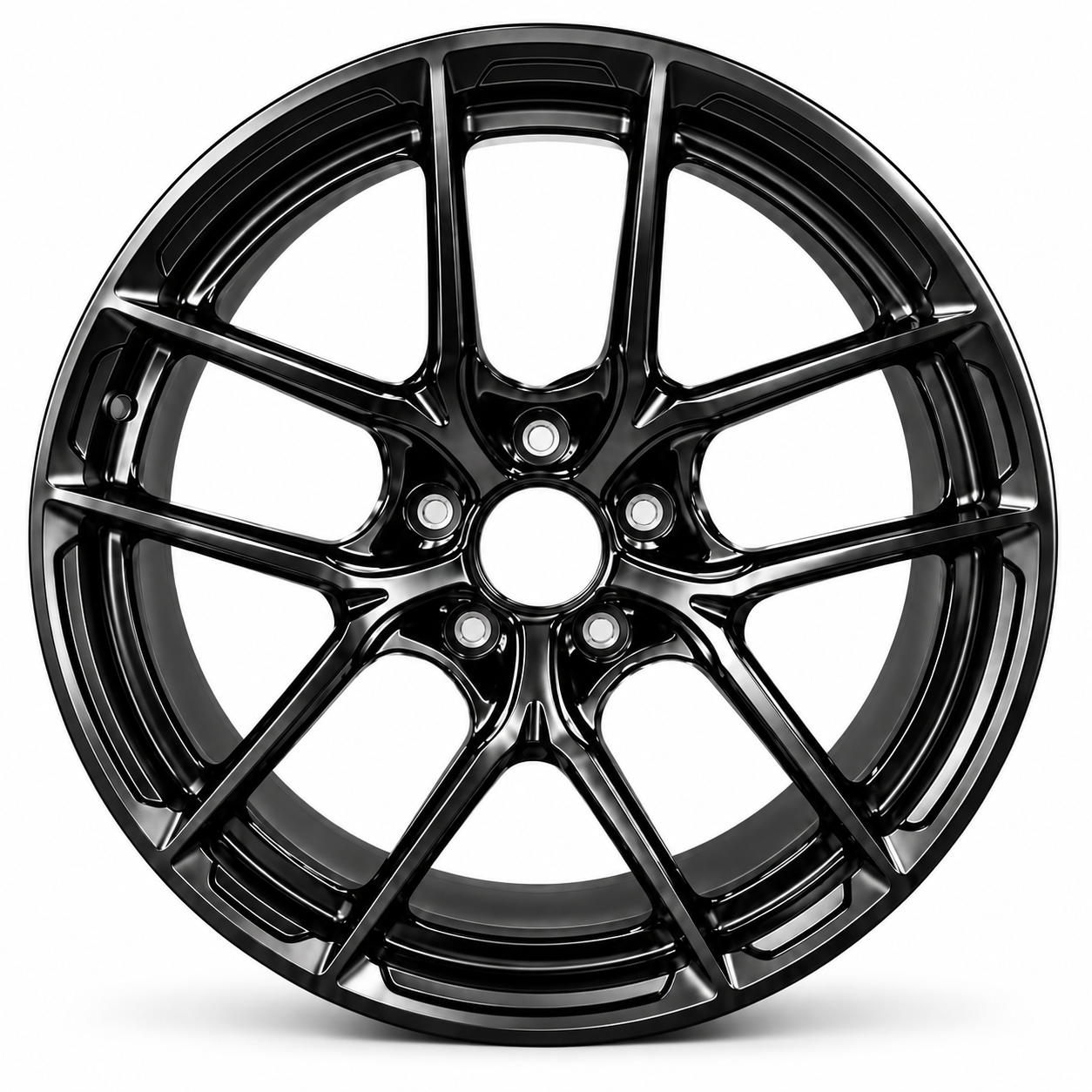
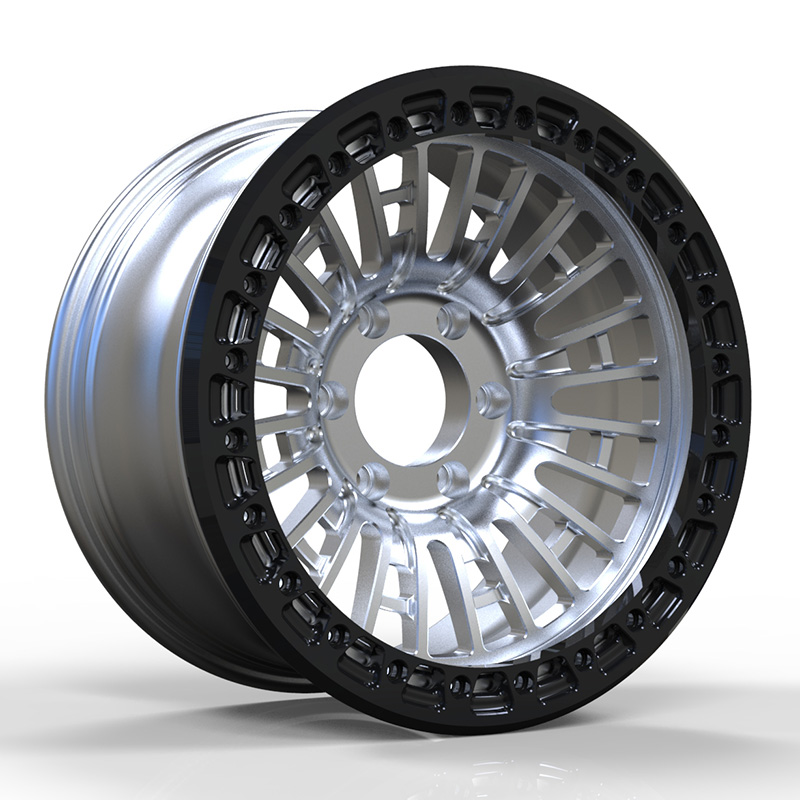
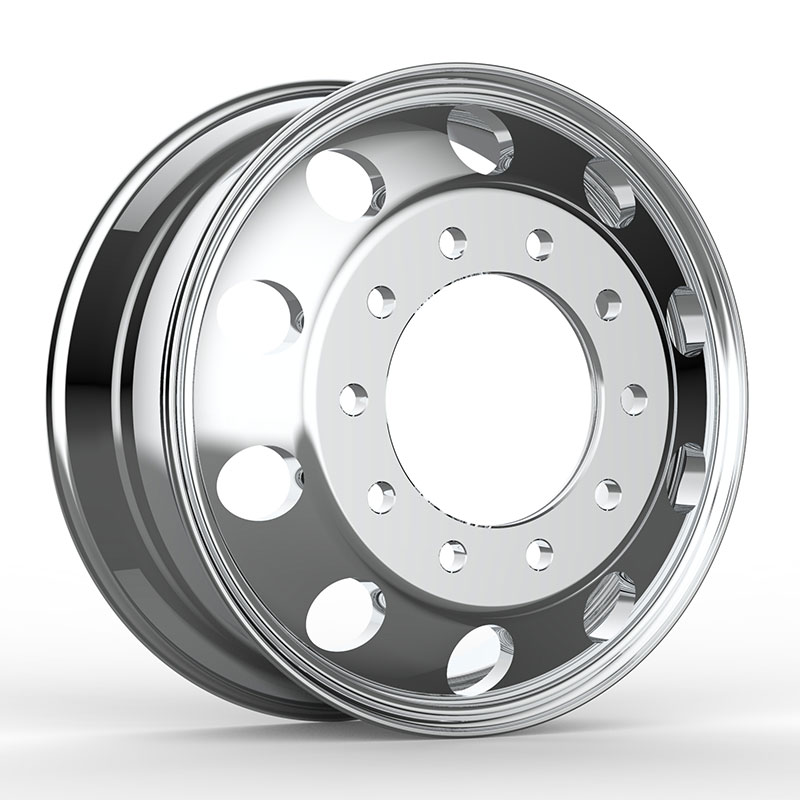
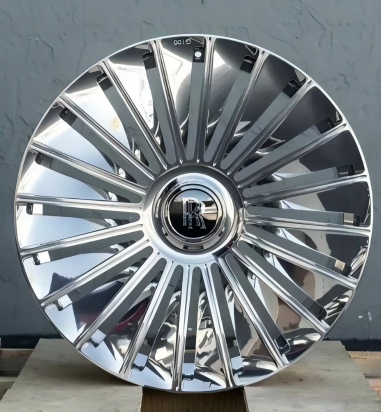
Before any of that, it helps to understand what you are actually shopping for. The forged wheel range that a manufacturer can offer is a good proxy for its real capability: a company that shows one monoblock pattern and a handful of colours has one design, while a company that can discuss two-piece and three-piece construction, beadlock rings, and multi-series ranges is describing tooling it genuinely controls. Read the product architecture first, then decide whose factory you want to visit.
What Separates a Wheel Factory From a Wheel Trading Company
Trading companies are not dishonest by definition; many of them are competent intermediaries who consolidate orders across several factories and handle export paperwork well. The trouble starts when a buyer believes they are dealing with a manufacturer and plans accordingly. A trader cannot re-cut a spoke profile because a caliper does not clear, cannot hold a colour batch while you test-market three finishes, and cannot tell you why one container of wheels balanced differently from the previous one. When a distributor's growth plan depends on the wheel, the supplier has to be the source of the wheel.
The tell is usually in the detail. Ask what the forging tonnage is on the press that produces your blank. Ask how many CNC spindles run wheel programmes exclusively, and what the daily spindle hours available to you are. Ask who heats and ages the parts after machining, and where the fatigue rig physically sits. A factory answers these in numbers and can send photographs the same day. A trader answers in adjectives, or promises to "check with the production team" and returns with a paragraph that avoids the question entirely.
| Question To Ask | Answer From a Real Factory | Answer That Should Worry You |
|---|---|---|
| Who forges the blank? | "Our press, our tooling, capacity per shift is X" | "A partner factory we have worked with for years" |
| Where is the finish applied? | "In-house line, here are the batch records" | "A specialised coating partner nearby" |
| Can you change the spoke profile for me? | "Yes, here is the tooling cost and revision cycle" | "We can ask the mould owner if it is possible" |
| Who signs the test report? | "Our QA department, under our certification scope" | "The lab issues it on behalf of the group" |
| Can we visit unannounced? | "Any working day, come and see the line" | "Please give us two weeks' notice" |
Capabilities a Forged Concave Wheels Company Must Own In-House
Every step you subcontract is a step where your specification becomes somebody else's interpretation. The only way to hold a concave profile, a backpad tolerance, and a colour standard across five years of production is to control the operations that determine them. Our own plant in Ningbo runs these stages under one roof across 12,000 square metres, which is why we can quote a revision cycle in days rather than in shipping time. Here is what to insist on seeing, and what each stage actually protects for a buyer.
- Forging and rotary forming. The blank and the barrel must be formed on controlled equipment, because grain flow is decided here and cannot be recovered later.
- Multi-axis CNC machining. Spoke windows, hub bore, bolt seats, and the concave face all need a simultaneous-axis cut to keep the profile consistent as diameter changes.
- Heat treatment and ageing. Without a controlled T6 cycle, hardness drifts batch to batch and a wheel that passed fatigue last year quietly stops passing it.
- Surface finishing. Hand brushing, polishing, chrome, matte, electroplating, and two-tone work each need their own line and their own inspection standard.
- Testing and metrology. Fatigue, impact, air-tightness, and dimensional verification are what turn a claim into a document you can hand to a customer.
- Assembly and sealing for multi-piece wheels. If the wheel is not monoblock, the torque sequence and sealant application must be a written process, not an operator's habit.
Five questions that end most bad supplier conversations:
Who owns the tooling, and what happens to it if we stop ordering?
Which certification is in your company name, and what is the exact scope?
What is the measured load rating for my exact fitment, in kilograms?
Who signs the deviation report when a batch misses tolerance?
What is your spare-part route for a wheel I sold three years ago?
Running a Factory Audit Before You Commit Volume
A factory audit is not a tour. A tour shows you the cleanest bay and the newest machine; an audit establishes whether the process can be repeated. Bring a specific agenda and insist on seeing the parts of the plant that are not staged for visitors, because the answer to "will this supplier still perform at triple the volume" lives in the warehouse, the calibration log, and the rework area, not in the showroom. If your order volume does not justify a visit, pay a third-party inspector to walk the line against your own checklist, and treat their photographs as the evidence base for the decision.
| Audit Area | What To Look At | What It Predicts |
|---|---|---|
| Incoming material | Billet certificates, segregated storage, traceability tags | Whether alloy grade is a habit or a contract term |
| Machining floor | Spindle hours booked to wheel work, tool wear logs | Real available capacity for your growth |
| Metrology room | Calibration dates on gauges, retained dimension records | Whether tolerances are measured or assumed |
| Rework and scrap area | Volume and disposition of rejected parts | How honestly the process controls itself |
| Finished goods | Packing standard, carton condition, label accuracy | Your damage claim rate next season |
Lead Times, Minimums, and the Real Cost of a Cheap Quote
Lead time is easy to promise and hard to hold. The number on a quotation is usually the optimistic case: material already in stock, a machine slot available next week, and a finish line with spare capacity. What you want to know is the pessimistic case, because that is the one your customer will experience. Ask what happens when the billet arrival slips, when a finish batch fails a salt-spray check, or when a port is congested the week your container is due. A supplier with in-house control over forging, machining, and finishing can compress recovery time; a supplier assembling a wheel from three other companies cannot.
Minimum order quantity tells a similar story. Our standing policy is one set, which is four wheels, and that is deliberate. It lets a new distributor validate fitment, finish, and packaging without gambling a container on an unproven specification. Standard configurations move through production in roughly seven to fifteen working days; a fully custom design, including new tooling, geometry development, and finish trials, runs twenty-five to thirty-five working days. When a quotation undercuts the market substantially, the saving is almost never in the manufacturing process. It is in thinner spoke sections, a lighter backpad, a lower-grade alloy, or a finish that will not survive a winter — and those costs arrive later, from your customer.
Scaling From One Set to a Full Container
The supplier relationship you need at one hundred wheels per year is not the same as the one you need at five thousand. At low volume you need flexibility and a low minimum. At scale you need locked specifications, allocated capacity, and a quality record that lets you trace a complaint back to a batch. The companies that survive that transition are the ones where the same engineering team handles both the first sample and the fifth container, so the specification does not drift as the order grows.
Structure the ramp deliberately. Start with a multi-option sample programme so you can compare finishes side by side on the same spoke design. Move the approved specification into monoblock production for the volume sellers, and keep the two-piece forged range or the three-piece forged range for the fitments where your customers want lip depth or a re-specifiable width. Add a hero pattern once, and add finishes around it rather than new geometry. That sequencing keeps your tooling investment low while your catalogue still looks three times wider than it is.
Contract Terms and Communication That Prevent Disputes
Most disputes between a buyer and a wheel factory are not caused by bad faith. They are caused by a specification that was agreed verbally, a tolerance that was never written down, or a colour that was approved from a photograph. The purchase agreement is therefore not paperwork; it is the tool that keeps a relationship calm for five years. A short contract with five clear clauses will prevent more trouble than a long one that leaves the important details to custom and practice, especially when the two parties are working across a language barrier and a nine-hour time difference.
The clauses that matter most are the ones a buyer rarely thinks to request. State the accepted tolerance on the backpad and the hub bore, because that is what decides whether the wheel sits where you promised. State the reference sample number for every finish, because "silver" means nothing. State the packing standard, including carton grade and the maximum drop height the box must survive. State the notification obligation for any change of material source or subcontractor. And state the spare-parts commitment, so a customer who damages a lip three years from now does not become your problem alone.
Payment structure follows the same logic. A deposit that covers material and tooling, a balance against a pre-shipment inspection report, and a clear statement of who pays for what in the event of a quality rejection removes almost all of the friction from a first order. Buyers who insist on a very high credit exposure with a new supplier, and suppliers who insist on full payment before any inspection, are both asking the other side to carry risk they cannot see. The middle ground is a third-party inspection, and it is cheap relative to the value of the container it protects.
Communication deserves the same attention. Nominate one contact on each side and agree a response window. Written confirmation within one working day sounds bureaucratic until the first time a fitment question arrives while a container is being loaded. In our own export work, buyers consistently tell us that the single most valuable supplier habit is answering questions in writing, because a written answer is what they can forward to their own customer when the same question comes back in six months.
- Specification appendix. Vehicle list, dimensions, tolerances, and load rating, signed by both parties before tooling begins.
- Approved sample record. A retained physical sample plus photographs and a reference number that appears on every subsequent order.
- Change notification clause. Mandatory notice of any alteration to material grade, tooling, or finishing line before it takes effect.
- Inspection and acceptance terms. Who inspects, against which standard, and within how many days of arrival.
- Spare-parts and repair clause. Availability of lips, barrels, centres, caps, and fasteners for a defined number of years.
- Intellectual property confirmation. Who owns the drawings and the tooling, and what happens if either party decides to end the relationship.
After-Sales: The Test That Separates a Partner From a Supplier
Every factory is helpful before the order. The useful test comes afterwards, when something has gone wrong and the money has already been paid. A partner investigates the claim, identifies whether the cause was manufacturing, transport, or installation, and proposes a remedy. A supplier sends a polite message explaining that the parts left the factory in perfect condition. Buyers remember which type they are dealing with, and it determines where the next three years of orders go.
Ask any prospective supplier to describe a real complaint they resolved and how they resolved it. A company with a functioning quality system will have a story ready, because complaints are recorded and reviewed. A company without one will struggle to produce an example, which is itself the answer. We retain batch records so that a wheel sold years ago can be traced back to its material certificate, its machining program, and its finishing batch. That traceability is the foundation of any honest investigation, and it is the reason we test more strictly than the published SAE, JWL, and PCT requirements, including additional thirty-degree and ninety-degree impact and deformation checks.
It also helps to agree in advance what constitutes a defect. A cosmetic mark inside a tyre-mounting area that no customer will ever see is not the same as runout beyond the stated tolerance, and treating them as equivalent wastes everyone's time and money. Define the acceptance criteria in the appendix, photograph the first shipment thoroughly on arrival, and compare later shipments against those photographs. Buyers who do this develop an early-warning system that catches process drift long before it becomes a complaint from a retail customer.
The strongest signal of a healthy relationship is not the absence of problems; it is the speed at which they are resolved and the willingness of both sides to correct the process rather than argue about the invoice. That is the practical meaning of working with a forged concave wheels company rather than buying from one. If you would like to see how our plant handles traceability, inspection, and after-sales support before you commit, the details are set out on our SSD one-piece series product pages and in the capability documents we send to new buyers.
FAQ: Choosing a Forged Concave Wheels Company
The questions below come up in almost every first meeting with a new distributor, importer, or private-label brand.
Q1. How do I tell a manufacturer from a trading company in one conversation?
Ask for the forging tonnage, the number of CNC spindles dedicated to wheels, and the physical location of the heat treatment furnace and fatigue rig. A manufacturer answers immediately and in numbers. A trading company deflects, or produces a list of certifications that belong to a different legal entity than the one on the quotation.
Q2. What certifications should the supplier hold in its own name?
At minimum a quality management system such as ISO 9001, and for automotive supply chains IATF 16949, plus environmental and occupational health scopes such as ISO 14001 and ISO 45001. Product-level evidence in the form of SAE J2530, JWL and JWL VIA, TUV, DOT, or ECE R124 test reports should follow. Check that the certificate scope names the products and the site you are actually buying from.
Q3. What is a realistic minimum order for a new private-label programme?
Buy a sample set first, which for us means one set of four wheels, and validate it on a real vehicle before committing to a volume order. Once the geometry and finish are frozen, most programmes begin with a mixed first order across two or three fitments, then add patterns as the sell-through data arrives.
Q4. Should I own the tooling for a custom design?
If the design is central to your brand, yes, and the ownership terms should be written into the agreement along with what happens to the tooling if the relationship ends. It is a short clause that prevents a very uncomfortable conversation later, and a serious manufacturer will not resist it.
Q5. How often should a supplier be re-audited?
Annually for an active account, and immediately whenever a change is made to the specification, the material source, or the subcontractor list. The riskiest moment in any supply relationship is a silent process change, so make change notification a contractual obligation rather than a courtesy.
What a Good Partnership Actually Looks Like
The supplier relationships that last are not the ones with the lowest quotation. They are the ones where you can call the engineer who drew your wheel, ask why a batch of twenty-inch wheels needed slightly more balance weight than the previous run, and get a real answer within a day. That kind of access only exists when the person who designs the wheel also works in the building where it is made. Our own plant structure is built around that idea: forging, rotary forming, CNC machining, heat treatment, finishing, and inspection on one site, certified to ISO 9001, ISO 14001, ISO 45001, and IATF 16949, with internal control testing deliberately stricter than the published SAE, JWL, and PCT requirements and additional thirty-degree and ninety-degree impact checks on top.
If you are at the stage of comparing suppliers, send two or three of them the same short brief: vehicle list, load target, preferred construction, and one reference finish. Compare what comes back. The differences in how thoroughly each response is engineered will tell you more about who you are dealing with than any certificate, and it will tell you whether you have found a forged concave wheels company that can genuinely grow with your order book. You can also review how we handle supply services and about RETA before your first call.