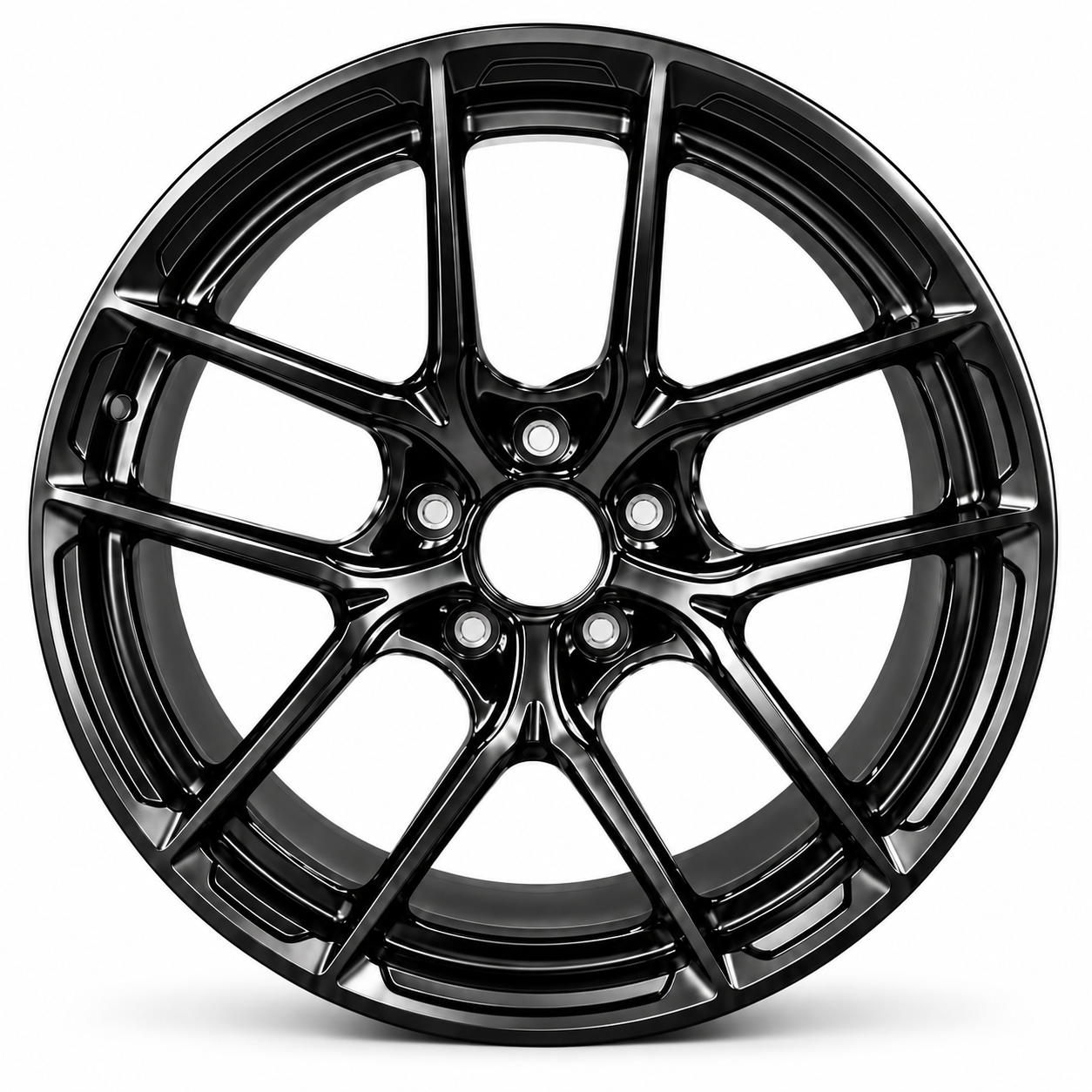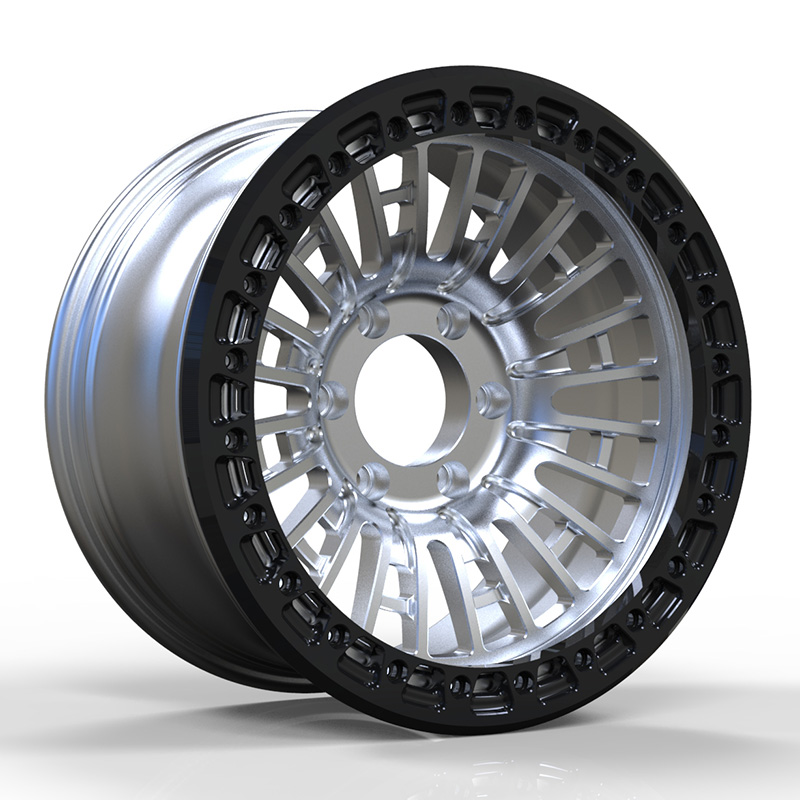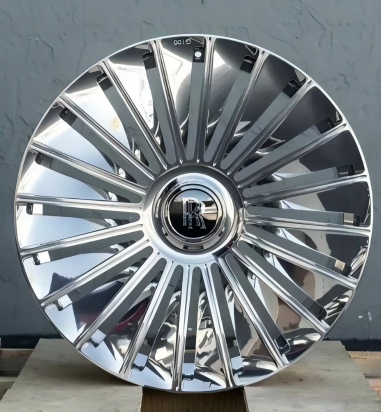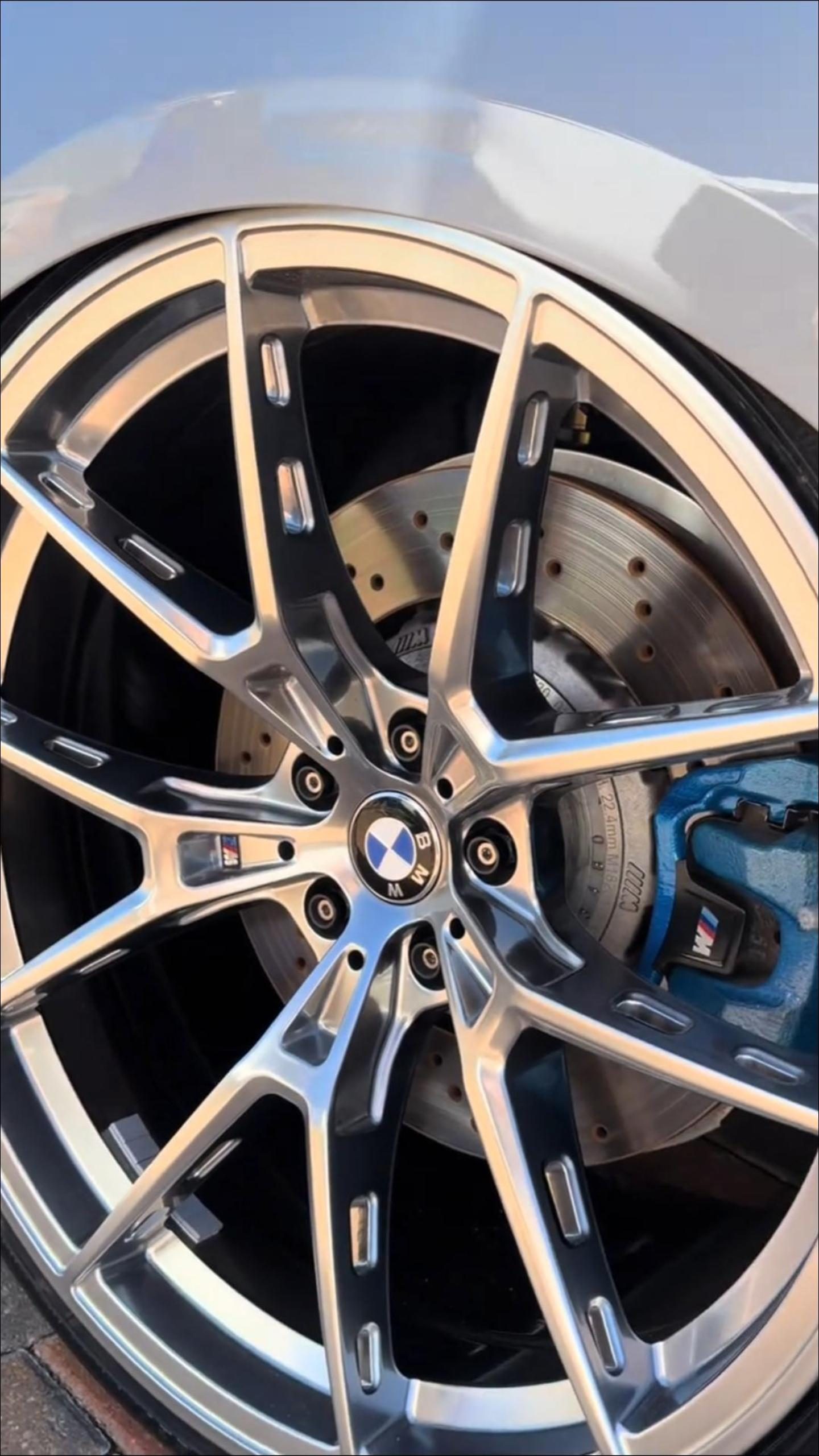
What OEM Forged Concave Wheels Mean for Brands Building a Signature Wheel Line
OEM forged concave wheels are the difference between owning a product line and renting one. When a brand commissions its own geometry, its own backpad dimensions, and its own finish library from a forging factory, it ends up with a wheel that no competitor can order from a catalogue, a specification it can defend in a fitment dispute, and an asset that carries value if the brand is ever sold. When it buys white-label wheels instead, it gets the same wheel as four other brands, with a different centre cap and a margin that shrinks every season.
The counter-argument is always cost and time. A custom programme does require tooling, drawings, and a sample cycle, and it does take longer than picking from a list. But the cost is a one-time investment against a multi-season return, and the real question is not whether a brand can afford an OEM programme; it is whether it can afford to build a customer base on a wheel that anyone else can undercut next month. This article sets out what an OEM forged concave programme actually contains, how the development sequence runs, what to put in writing, and where new brands most often lose money.
One clarification before going further: "OEM" in this industry means original equipment manufacturer, and in practice it describes any arrangement where the buyer holds the design and the factory builds to it. It does not require a vehicle manufacturer as the customer. A wheel retailer with a strong local brand, a tuning house with its own identity, and a distributor with a dealer network are all legitimate OEM customers. The wheel customization programme we run for exactly those buyers is the basis for everything below.
What an OEM Programme Actually Contains
Brands that have never commissioned tooling often imagine the deliverable is "a wheel design." In reality a proper OEM programme is a bundle of six deliverables, and the wheel is only the most visible one. The others are what make the line repeatable, and they are usually what a first-time buyer forgets to ask for and then has to pay for later. Ask for the bundle explicitly and put it in the agreement; a factory that has run OEM programmes before will recognise the list immediately.
- Geometry package. 3D models and 2D drawings covering spoke profile, concave depth, backpad, hub bore, bolt circle, and valve position.
- Fitment schedule. A table mapping each variant to vehicle, diameter, width, and offset, so your sales team can quote without guessing.
- Finish library with approved samples. Physical reference parts, not screenshots, so a colour dispute has an objective answer.
- Certification and test evidence. Reports issued against your model number, covering fatigue, impact, and air-tightness.
- Branding execution. Centre cap design, engraving, embossing, box artwork, and label specification built into the tooling rather than added afterwards.
- Tooling ownership terms. Who owns the moulds and programs, how they are stored, and what happens to them if either party exits.
| Route To Market | What The Brand Controls | Long-Term Consequence |
|---|---|---|
| White-label catalogue purchase | Price negotiation only | Margin erosion; identical product sold under rival brands |
| OEM geometry, factory branding | Depth, fitment, and finish on a shared platform | A recognisable line at moderate tooling cost |
| Full OEM with owned tooling | Everything, including the right to move production | A defensible asset and a sellable specification |
Designing a Concave Range That Looks Like One Family
The hardest part of a signature line is not designing one wheel; it is designing a range. A customer who buys a nineteen-inch front wheel and a twenty-one-inch rear wheel expects them to look like members of the same family, and that only happens if the spoke proportions, the concave depth, and the lip treatment all scale predictably with diameter. Get this wrong and the line looks like a collection of unrelated parts, which is exactly the impression a white-label catalogue gives. Get it right and the brand becomes recognisable at fifty metres, which is worth more than any advertising budget.
The practical way to achieve it is to freeze the design language before the first tool is cut. Choose a spoke count and a spoke shape that read correctly at every diameter. Define a concave depth ratio rather than an absolute depth, so the depth grows with the wheel instead of becoming shallow on the large sizes. Decide how the lip is treated across the range, and whether the same treatment appears on the multi-piece variants. Our SSD three-piece series and the MMX one-piece monoblock line exist in parallel precisely so a brand can cover the deep-lip end of the market and the lightweight track end without the two looking unrelated.
Where New Brands Lose Money
The most common mistake is developing too many patterns at once. A new brand with four designs and no sell-through data ends up holding tooling for three that never sold, and it has spent its entire launch budget on geometry rather than on inventory and marketing. The second is approving a finish from a photograph. Screen calibration varies enormously, and a "brushed bronze" that looked warm on a monitor can arrive looking grey; every finish should be approved on a physical sample before the batch is produced. The third is ignoring packaging. A premium wheel in a flimsy carton arrives scratched, and the customer blames the wheel, not the box.
A launch sequence that works:
One hero pattern in two diameters, both validated on real vehicles.
Three approved finishes on the hero pattern, not eight unapproved ones.
Branding executed through tooling: caps, engraving, box, label.
Fitment schedule published before the first container ships.
Second pattern added only after the first sells through.
The Development Timeline, Honestly Described
Brands are routinely disappointed by OEM timelines because nobody explains what happens inside them. A custom programme takes longer than a standard order for reasons that have nothing to do with production speed: geometry has to be reviewed, a model has to be cut, a sample has to be inspected and either approved or revised, and the finish has to be trialled on a real part. In our plant, a standard configuration that already exists in the range moves through production in roughly seven to fifteen working days, while a fully custom design including tooling, geometry development, and finish trials runs twenty-five to thirty-five working days. The difference is entirely in the front end.
Two habits compress that timeline substantially. First, send complete vehicle data at the start rather than in stages, including the brake package and the intended suspension state, so the fitment is right on the first model. Second, nominate one decision-maker on your side. Programmes that stall are almost always programmes where five people each have a veto on the colour. A single approver who can sign off geometry and finish within forty-eight hours turns a two-month development into a five-week one, and that saving is worth more than a marginal price concession.
Quality Consistency Is the Real OEM Deliverable
The reason a brand builds its own line is not that the geometry is unique; it is that the eighth container must match the first. That is a manufacturing discipline question, and it is where a factory's certifications and control systems earn their keep. Our plant holds ISO 9001, ISO 14001, ISO 45001, and IATF 16949 certification, and our internal control testing is deliberately stricter than the published SAE, JWL, and PCT requirements, with additional thirty-degree and ninety-degree impact and deformation checks. Those checks exist to catch a drift in material, tooling, or heat treatment before it reaches a customer, which is exactly the risk a brand carries when it puts its own name on the box.
Ask any prospective OEM partner how they handle three specific scenarios: a batch that fails dimensional inspection, a change of material supplier, and a customer complaint two years after delivery. The answers reveal whether the relationship will hold under pressure. A factory with a genuine quality system will describe a deviation report, a change notification requirement, and a retained sample archive. A factory without one will tell you it has never happened, which is not the same thing as being prepared.
Consistency starts further upstream than most buyers expect. It starts with the billet, because a change of aluminum source changes the forging behaviour even when the alloy designation is identical. It continues through the forging press, where die temperature and press cycle determine how completely the grain structure follows the shape of the wheel. It is protected through heat treatment, where an ageing cycle that drifts by a small margin produces a part that measures correctly and fatigues early. Each of those stages is invisible in a finished wheel, and each of them is a place where a factory without a written process quietly becomes a different factory every few months. That is why we treat material source as a controlled item rather than a purchasing decision.
For a brand owner, the practical defence is a retained sample programme. Keep one wheel from each batch in storage, unopened, and inspect it annually against the first approved sample. Weight it, measure it, and compare the finish. Differences that would never be visible in a photograph show up immediately on a scale, and a drift of a few hundred grams across a season is the earliest visible signal that something in the process has changed. It costs one wheel per batch and it gives you a factual basis for a conversation with your supplier long before a customer notices anything.
Packaging, Logistics, and the Last Mile to Your Dealer
A signature wheel line is judged twice: once in the product photograph, and once when the carton is opened. The second judgement is the one that generates returns, and it is the one most brands leave to chance. A wheel that leaves the factory flawless and arrives with a scuffed lip has cost you the margin on the order and, more importantly, the confidence of the dealer who has to explain it to an end customer. Packaging is therefore part of the OEM specification, not an afterthought added by the shipping department.
Specify the carton grade, the internal protection arrangement, and the maximum drop height the package must survive, then verify it on the first shipment rather than assuming it. A wheel should sit on a protected face with a foam or moulded insert separating it from the wall of the box, and the carton should be taped in a way that shows whether it has been opened. Branded packaging is worth the modest tooling cost, because it converts a shipping expense into a marketing surface and it makes the dealer's unboxing experience predictable across every shipment.
Then think about the journey after the container. You may be shipping to a distributor who repacks and sends single wheels onward, or to dealers who receive mixed pallets. Whichever it is, the packaging has to work again after the first leg has ended. We have seen brands solve this by supplying a properly sized outer carton plus a reusable inner box, which costs a little more per unit and removes an entire category of transit complaint. It is a design decision worth making at the same time as the wheel, because retrofitting packaging across an established line is more disruptive than designing it once.
Documentation travels with the goods and matters as much as the foam. Each carton should carry a label that matches the commercial invoice, and each shipment should include the dimensional record and the test evidence pack referencing your model number. When a dealer calls with a fitment question two months later, the label is what lets them identify the exact variant without measuring anything. This is a small operational discipline that separates brands which scale cleanly from brands that grow by absorbing chaos.
- Carton and insert specification. Written into the OEM agreement, with a retained reference sample of the packed unit.
- Label standard. Model, size, offset, finish, and batch reference in a format your warehouse can read at a glance.
- Batch reference. The same number appears on the wheel, the carton, the inspection record, and the invoice, which is what makes traceability real.
- Accessory kit. Centre caps, bolts or nuts where applicable, valve stems, and a short fitting note, packed so they cannot damage the finish.
- Arrival inspection routine. Photograph the first container on arrival and use those images as the reference for every container that follows.
Running an OEM Relationship Across Multiple Seasons
The first order is the easy part; the third season is where an OEM programme proves itself. By then your best-selling fitment is out of stock somewhere, a finish has been discontinued because a coating supplier changed a pigment, and a dealer is asking for a variant you never planned for. How the relationship handles those three events determines whether your brand grows smoothly or spends its energy firefighting. The remedy is unglamorous: a rolling forecast, a locked specification archive, and a standing quarterly review.
A rolling forecast does not need to be accurate to be useful. Sharing an indicative twelve-month view of each pattern and finish lets the factory reserve material and machine time, which is what protects your lead time when demand spikes. In return, the factory owes you early warning of anything that could interrupt supply, whether that is a material change, a tooling refurbishment, or a holiday shutdown. Both commitments are cheap to make and expensive to skip, and they are the practical content of a manufacturing partnership.
The locked specification archive matters most when a colour is discontinued. If you hold approved physical samples and the associated process parameters, you can either match the finish with a new supplier or move the whole line deliberately and tell your dealers what to expect. Without that archive, you discover the change only when a customer complains that the new wheels do not match the old ones on the other side of the car. We keep retained samples and batch records for this reason, and we treat a finish change as a formal revision rather than a production detail.
Finally, plan the range rather than the order. Brands that thrive add one pattern and one finish per season, retired deliberately on the basis of sell-through, instead of accumulating variants until the warehouse and the catalogue both become unmanageable. That discipline is easier when the factory can supply cost and tooling data per variant, which is exactly the kind of support a genuine OEM forged concave wheels partner should provide without being asked. Our plant in Ningbo runs forging, rotary forming, multi-axis machining, heat treatment, finishing, and inspection on one site, with 12,000 square metres of floor space and 7075 forged aluminum in volume production, so the answer to "can we add one more variant" does not depend on a third party's schedule.
FAQ: OEM Forged Concave Wheels
The questions below come from brand owners, tuning houses, and distributors evaluating their first OEM programme.
Q1. What is the minimum order for an OEM forged concave wheel design?
Our policy is one set, four wheels, for a sample so the design can be validated on a real vehicle before any volume commitment. Volume orders that follow are quoted per pattern and per finish, and most brands start with a mixed first order across two or three fitments rather than a single large one.
Q2. Who owns the tooling in an OEM programme?
That is a commercial term, and it should be written into the agreement rather than assumed. If the geometry is central to your brand, own the tooling and state where it is stored and what happens on termination. Serious factories accept this without difficulty; the conversation itself is a useful test of the supplier.
Q3. Can branding be added to a standard design instead of developing a new one?
Yes, and for many brands it is the sensible first step. Centre cap design, engraving, or embossing on an existing certified pattern gives you brand presence with minimal tooling cost, and it lets you learn your market before commissioning new geometry. A dedicated design can follow once the volumes justify it.
Q4. How many finishes should a new line launch with?
Three is usually enough: one brushed or machined option, one dark satin or gloss, and one premium polished or bronze. Every additional finish multiplies your inventory risk and slows production, so add colours as data arrives rather than in advance of it.
Q5. What documentation should I expect with each shipment?
At minimum a dimensional inspection record against the approved drawing, a test evidence pack referencing your model number, and a packing list that matches the carton labels. For multi-piece wheels, add the assembly torque record. These documents are what allow you to answer a customer complaint with evidence rather than an apology.
Turning a Design Into a Product Line
An OEM programme is a commitment on both sides, and the factories that do it well are the ones that behave like an engineering partner rather than an order desk. That means pushing back when a requested concave depth will not clear the customer's calipers, warning when a finish is unlikely to survive a coastal market, and flagging when a proposed range is too wide for the volume behind it. We have been building forged aluminum wheels in Ningbo since the RETA brand was established, with 12,000 square metres of plant, more than one hundred staff, and volume production of 7075 forged aluminum for overseas customers. The advice is free; ignoring it is what costs money.
If you are planning a signature line, start the conversation with your vehicle list and your target customer, not with a colour chart. We will come back with a geometry concept, a fitment schedule, and a development plan, and you will know within one exchange whether OEM forged concave wheels are a realistic route for your brand this season. Brands that want to see finished work before committing can browse our RETA custom forged wheel references and the company news archive first.