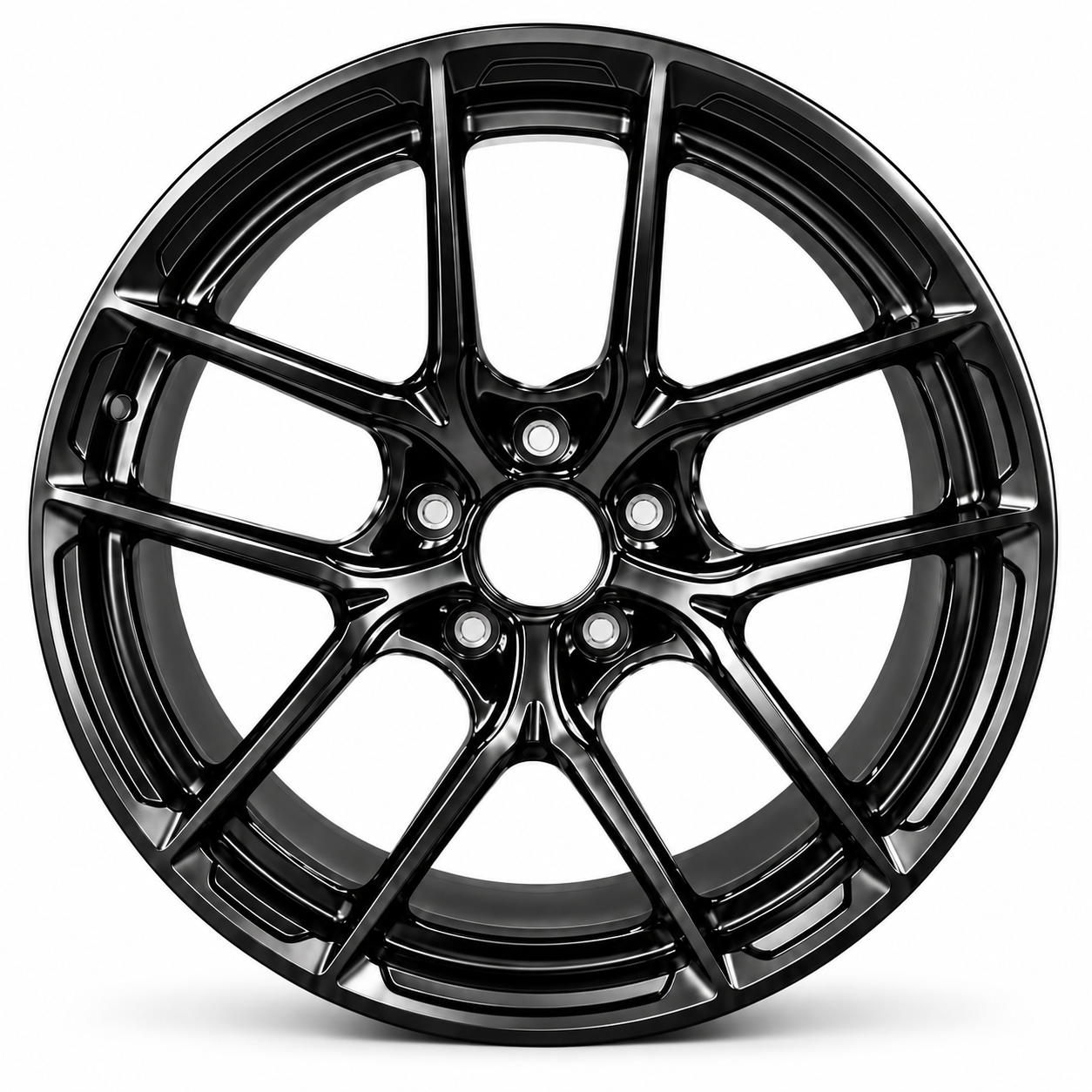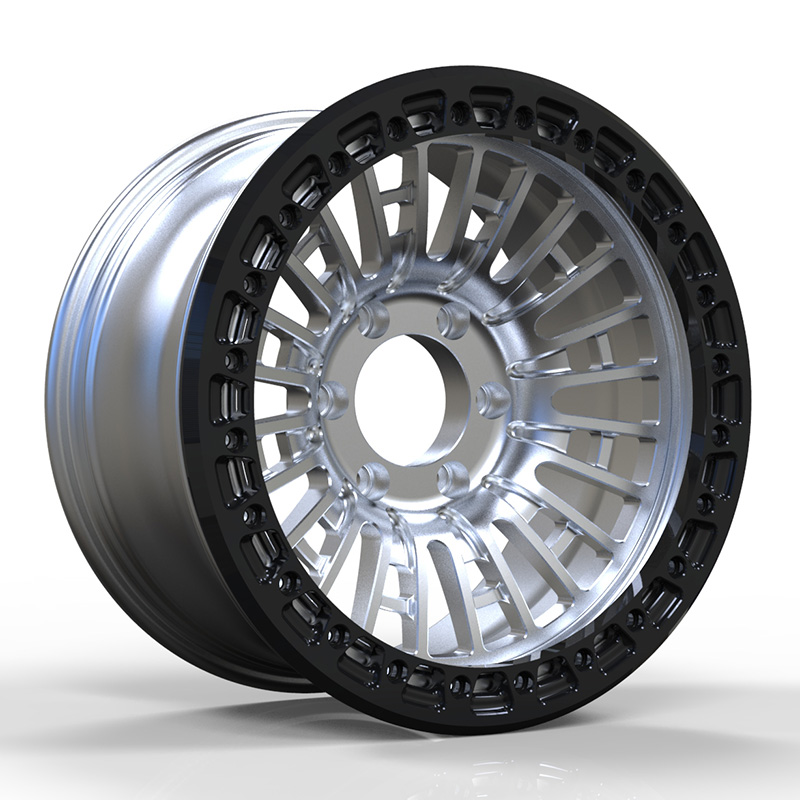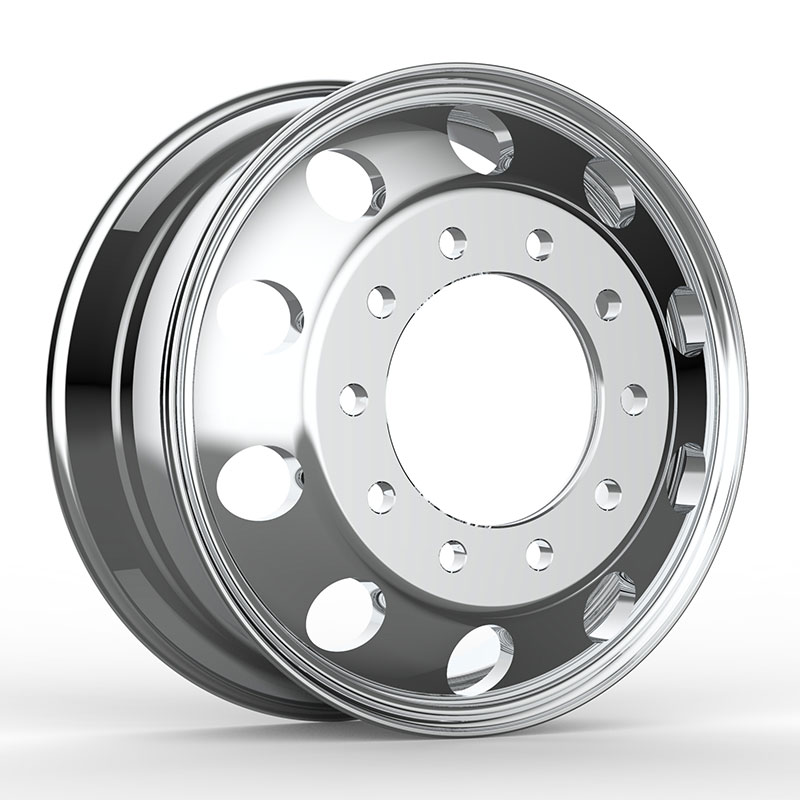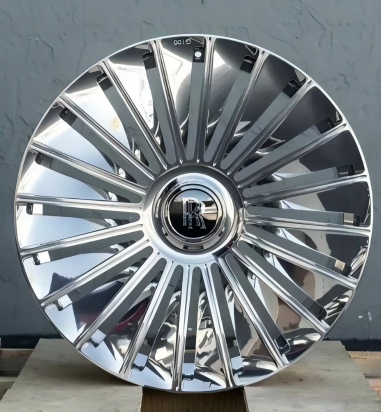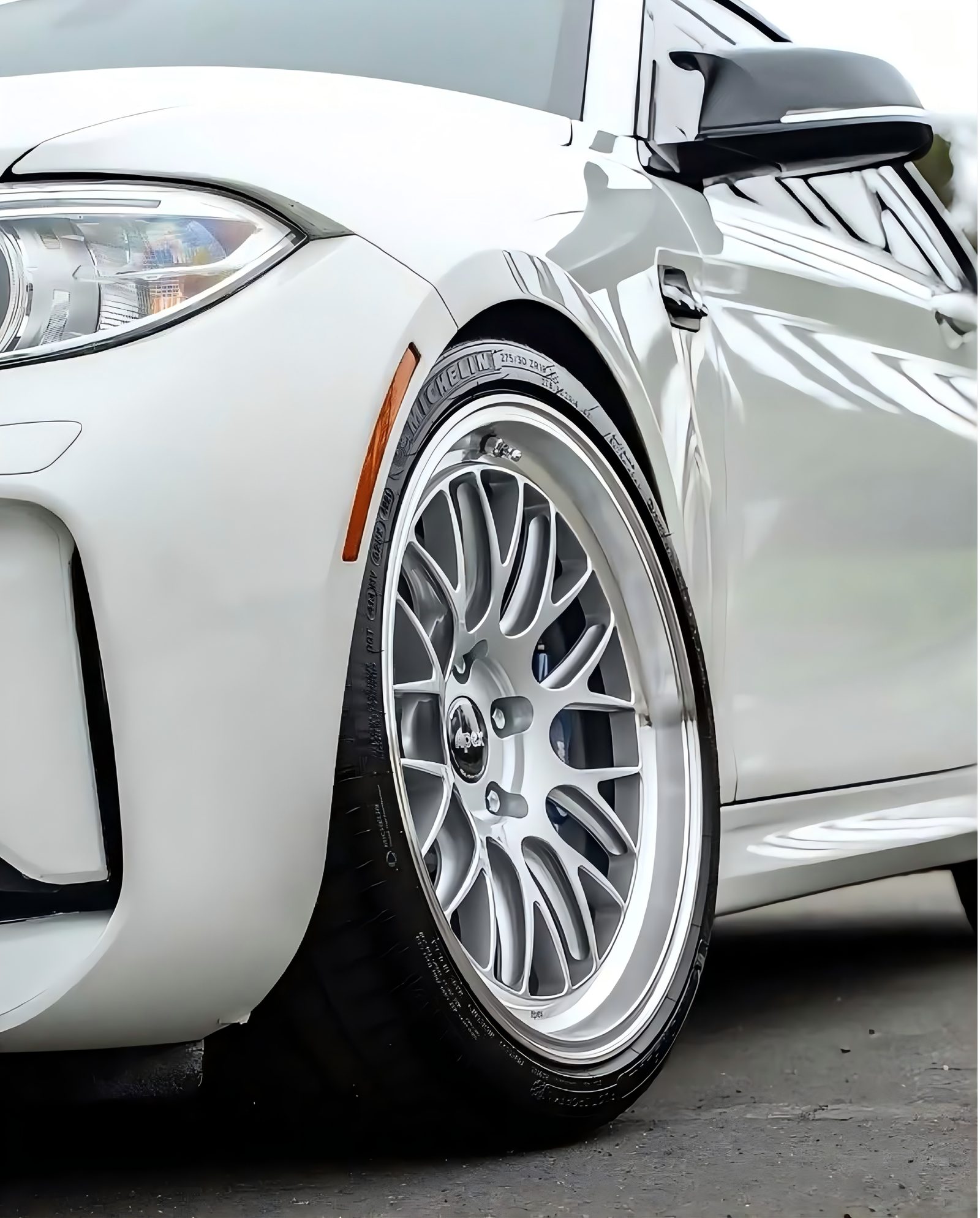
You should choose concave forged wheels over others when two requirements arrive at the same time: the wheel has to carry a real load and it has to deliver a deep, deliberate stance. That combination is exactly what a cast or flow-formed wheel struggles with, because those processes trade away either strength or depth depending on how the tool is cut. A forged wheel does not have to make that trade, because the material allows the designer to remove mass from one region and add it to another without weakening the part.
Most buyers arrive at this question the wrong way round. They start with a photograph, choose the deepest wheel they can find, and then discover that the necessary strength compromises were made somewhere else in the design. The better sequence is to define the load the wheel must carry, define the fitment it must achieve, and only then decide how much concave depth is available without touching either. This article works through that sequence honestly, including the cases where a forged concave wheel is not the right answer at all, because those cases exist and a supplier who will not admit it is a supplier who will sell you the wrong product.
It helps to have a reference point for what the deeper end of the range looks like in production. The super concave range on our own site illustrates the trade-off clearly: deeper profiles are available, but only for vehicles with the brake clearance and fender space to accept them, and only when the spoke section can still carry the cornering load.
The Alternatives You Are Choosing Between
When a buyer says "over others," they usually mean one of three things: a cast wheel, a flow-formed wheel, or a flat-face forged wheel. Each has a legitimate place, and each fails in a specific way when a deep concave design is demanded of it. Understanding which failure you are buying is the whole point of the comparison, and it is far more useful than a generic quality ranking.
A cast wheel is made by pouring molten aluminum into a mould. It is economical, and it can be produced in almost any shape, but the material contains porosity and its fatigue behaviour is less predictable than wrought material. Flow forming improves the barrel by spinning it under rollers while the centre stays as-cast, which is a genuine improvement for the rim section but does not change the spoke. A flat-face forged wheel uses the same forging advantages as a concave one but arranges the spokes in a shallower geometry, which is easier on brake clearance and often stiffer but does not produce the visual effect most customers are asking for.
A concave forged wheel sits at the intersection. It borrows the material advantages of forging and applies them to a geometry that demands more from the spoke, so the designer has to think harder about section thickness, taper, and the transition from spoke to hub. Done properly, the result is a wheel that is both stronger and deeper than the alternatives at the same weight. Done carelessly, it is a wheel that looks impressive in a photograph and flexes under load, which is a far worse outcome than simply buying a flatter design.
| Construction | Strength At Equal Weight | Available Concave Depth | Where It Fails |
|---|---|---|---|
| Cast aluminum | Lowest; porosity limits fatigue life | Restricted by mould release angles | Heavy wheels, cracking under repeated impact |
| Flow formed | Good barrel, cast centre | Moderate; spoke is the limiting factor | Spoke deflection under high load |
| Forged, flat face | High; excellent stiffness per kilogram | Limited by hub face position | Does not deliver the requested stance |
| Forged, concave | High, if the spoke is designed for the load | Deepest available without losing stiffness | Requires vehicle-specific brake clearance work |
Strength: What Forging Changes Beyond the Marketing Claim
The strength advantage of forging is not a slogan; it comes from grain structure. When a billet is pressed under high force, the internal grain of the aluminum is deformed and aligned with the direction of material flow, which means the finished part resists fatigue in the direction it is actually loaded. Casting cannot do this, because solidification produces a random grain orientation and leaves shrinkage porosity behind. Flow forming improves the barrel in the same way it improves any rolled product, but the spoke and hub remain as cast, which is where the highest stresses occur on a deep concave design.
Fatigue is the property that matters most in service, because wheels almost never fail from a single overload. They fail from a crack that starts and grows over hundreds of thousands of load cycles, usually at a stress concentration such as a spoke root or a bolt seat. Forged material resists crack initiation better and tolerates a small crack for longer, which is why a forged wheel can be machined thinner in the spoke without becoming fragile. That is the technical reason a deep concave forged wheel can be both lighter and more durable than a shallower cast one, and it is measurable on a fatigue rig rather than asserted in a brochure.
Stiffness is a separate property and worth separating in a buyer's mind. A wheel that is strong but not stiff will survive the load and still deflect enough to blur the steering, which is the failure mode owners describe as vagueness. Forging allows a stiffer section at the same mass, and a well-designed concave spoke can be stiffer than a flat-face design while still being lighter, because the material is placed where the bending moment is highest. When a supplier cannot describe where the material sits in their spoke cross-section, they are describing a shape rather than a structure.
The final element is load rating, which is the number a buyer should actually buy against. It is expressed per wheel, and it must cover the heaviest configuration the dealer will sell, including a fully loaded vehicle with passengers and luggage. A forged concave wheel can be rated for a heavy platform without becoming visually compromised, because the extra material goes into the backpad and the spoke root rather than into the visible face. That is why an SUV-specification forged wheel can still look like a deep concave design while a mass-produced alternative in the same application cannot.
Stance: Where Concave Depth Comes From and What Limits It
Stance is a visual outcome produced by four measurable inputs: concave depth, lip depth, offset, and diameter. Change any one of them and the car reads differently, which is why a customer who liked a photograph can be disappointed by a wheel with the same nominal dimensions. If you want repeatable results across a dealer network, each of the four has to be specified rather than implied.
- Concave depth is the distance from the outer lip plane to the deepest point of the spoke face, and it is limited by brake clearance behind the spoke.
- Lip depth comes from where the spoke meets the rim, and on multi-piece wheels it can be extended independently of the centre.
- Offset decides how far the whole assembly sits from the hub, and it is the single most consequential choice for both appearance and behaviour.
- Diameter changes how the proportions read, because a spoke pattern that looks purposeful at twenty inches can look stretched at twenty-two.
The practical consequence is that stance cannot be engineered independently of fitment. A dealer who wants a deep concave look on a vehicle with large brakes has to accept either a slightly shallower profile, a small change in offset, or a different diameter. There is no fourth option, and any supplier who promises one is either not measuring or not telling the truth. The good news is that the compromise is usually invisible to a customer when it is explained in advance, and glaring when it is discovered afterwards.
This is also where multi-piece construction earns its place. On a two-piece forged wheel, the centre and the barrel are separate parts, so lip depth and barrel width can be changed without re-cutting the spoke design. For a dealer whose customers care more about lip than about spoke shape, that flexibility produces stance more efficiently than a deeper monoblock, and it keeps the centre pattern consistent across the range.
Why Choose Concave Forged Wheels Over Others: A Practical Test
If you want a decision rule rather than a discussion, use this one. Write down the heaviest vehicle the wheel will be fitted to, the diameter and width you intend to sell, and the deepest concave profile your customers are asking for. Then ask your supplier to confirm that the load rating covers the first, the fitment matches the second, and the third is achievable without reducing the spoke section below their own internal minimum. A supplier who answers all three with numbers is offering a forged wheel. A supplier who answers with reassurance is offering a shape.
For most dealers, the honest answer is a mixed range rather than a single construction. A one-piece forged wheel carries the performance and EV volume where weight and stiffness matter most. A two-piece construction covers customers who want lip depth and flexibility. A three-piece wheel serves the show-focused end and the buyers who value repairability. Trying to serve all three segments with one construction is how ranges become confusing and how inventory becomes expensive.
| Buyer Priority | Recommended Construction | Reason |
|---|---|---|
| Maximum strength, minimum weight | One-piece forged, moderate concave | Fewest joints, stiffest structure per kilogram |
| Deep visual stance | Two-piece or three-piece forged | Lip depth can be extended without touching the spoke |
| Heavy SUV and EV platforms | One-piece forged with a heavy-spec backpad | Load rating is met inside the hub and spoke root |
| Repairability and long-term cost | Multi-piece forged | A damaged lip can be replaced instead of scrapping the wheel |
Cases Where a Forged Concave Wheel Is Not the Answer
There are situations where we advise buyers against a forged concave wheel, and a supplier who never does that is worth treating with suspicion. A customer who wants an inexpensive winter set that will be damaged by road salt and kerbs is better served by a simpler wheel they can afford to replace. A commercial vehicle operating at maximum load for most of its life is better served by a purpose-designed heavy-duty wheel than by a passenger-car design pushed to its limit. And a customer who never leaves smooth city roads does not gain much from the weight reduction, although they will still benefit from the appearance.
It is also worth being honest about the maintenance side. A deep concave wheel exposes more of the barrel and the inner face to brake dust, and a polished or machined finish needs more attention in a coastal or winter market than a simple satin coating. That is not a reason to avoid the product, but it is a reason to tell the customer what ownership involves before the sale rather than after. The deep concave forged wheels range is a good example of a product where a five-minute explanation prevents a five-minute complaint.
- Budget winter or utility use. A cast or flow-formed wheel that can be replaced cheaply is often the rational choice.
- Continuous maximum-load commercial duty. Purpose-built heavy-duty wheels exist for a reason and should be used.
- Extremely tight brake clearance. Sometimes the correct specification is a flatter face, and insisting on depth creates a real safety margin problem.
- Customers who will not follow a maintenance routine. A highly polished finish in a hard climate needs periodic care, and that expectation should be set.
The short version for a dealer's quotation sheet:
Buy against load rating first, appearance second.
Specify offset deliberately; never let it drift to fill an arch.
Match construction to the customer's priority, not to your stock list.
Approve a physical finish sample before the batch, every time.
What the Choice Looks Like Over Five Years of Ownership
Buyers usually compare wheels at the moment of purchase, which is the worst moment to compare them. The differences that matter accumulate over years: how the finish holds up, whether the wheel can be repaired, whether a replacement can still be obtained, and whether the customer comes back for a second set. A decision that looks expensive on day one is often the cheaper decision by year three, and the reverse is just as true. This is the part of the comparison that a specification sheet never shows.
Take appearance retention first. A forged wheel holds its geometry better because the material is more dimensionally stable and less prone to the slow distortion that shows up on a cast wheel after repeated thermal cycling around the brake area. In practice the owner notices this as a wheel that still balances with a small amount of weight after several years, rather than one that gradually needs more. A wheel that starts to require large balance corrections is often a wheel whose material has begun to move, and that is a very difficult problem to correct afterwards.
Then there is the question of damage and renewal. In a market with kerbs, potholes, and winter grit, most wheels will eventually take some impact. A one-piece forged wheel that is structurally sound can often be re-finished, and a multi-piece wheel can have its outer lip replaced. A cast wheel that takes a significant lip impact is usually scrap, and a customer who has to replace a wheel rather than repair it is a customer who is already thinking about a different brand. This is a strong argument for multi-piece construction in dealer markets, even though the initial specification is more complex.
Finally, consider supply. A forged programme is only useful if the same wheel can be supplied in three years, in the same finish, at the same specification. That depends on tooling being retained and on a factory that is still operating, which is a straightforward argument for buying from an established manufacturing plant rather than from a broker who may have moved on. When a wheel cannot be matched, the dealer is left explaining to a customer why one corner of the car looks different from the other three, and that conversation costs far more than the original difference in purchase price.
There is also a resale dimension that buyers underestimate. A car that has been fitted with a well-known forged programme sells more easily than one with an anonymous set, because a knowledgeable buyer can verify the construction and the specification. That is a small premium, but it is a real one, and it tends to surface exactly when a customer is deciding whether to spend the difference in the first place. When you explain why choose concave forged wheels over others, resale and verification are two arguments that a cast or unbranded alternative simply cannot answer.
FAQ: Why Choose Concave Forged Wheels
These are the questions dealers and importers ask most often when they are comparing forged concave wheels against the alternatives.
Q1. Is a forged concave wheel worth the price difference over flow formed?
It depends entirely on the application. For a heavy vehicle, a performance car, or a customer who values steering precision, the answer is usually yes. For a light car used gently on good roads, a flow-formed wheel may deliver most of the benefit for less money. We would rather tell a buyer that than sell them a product they cannot justify.
Q2. Can a deep concave forged wheel be as strong as a flat-face design?
Yes, provided the spoke is engineered for the load it will carry. Depth changes where the material has to sit, not whether the wheel can be strong. The failure cases in the market come from deep designs produced on generic patterns, not from the concept of a concave forged wheel itself.
Q3. What load rating should I specify for a mixed vehicle range?
Specify per fitment rather than one number for the whole range. A wheel sold into a large SUV programme and a wheel sold into a coupe programme should not share a rating, because the buyer of the lighter car pays a weight penalty for margin they will never use. Ask for the rating of each variant in writing.
Q4. How do I compare two forged concave wheels that look identical?
Compare weight at the same size, backpad dimension, spoke root thickness, and the test reports. Weight at a given size and stiffness is the clearest indicator of design quality, because a wheel that is heavier than its competitor at the same dimensions has usually been designed conservatively around a weaker material or a generic pattern.
Q5. Does a concave forged wheel suit electric vehicles?
It suits them particularly well. Battery mass raises the load rating the wheel must meet, and forging meets that target without the weight penalty of a cast alternative. EVs also mask less road noise, which makes a well-balanced, tightly toleranced wheel more noticeable to the driver than it would be in a combustion car.
Getting the Decision Right the First Time
The difference between a successful forged concave programme and an expensive lesson is usually a single conversation held before the order: what the wheel has to carry, what it has to look like, and what the customer's maintenance habits are. Dealers who have that conversation close more second sales, because their customers get what they were promised. Our own production sits on one site in Ningbo, covering forging, rotary forming, multi-axis machining, heat treatment, finishing, and testing, with 12,000 square metres of plant, 7075 forged aluminum in volume production, and certification to ISO 9001, ISO 14001, ISO 45001, and IATF 16949.
Send us the vehicle list and the load targets, and we will tell you which fitments should be concave forged, which should be multi-piece, and which do not need forging at all. That answer costs you nothing, and it is the fastest way to decide why choose concave forged wheels over others for the applications that matter in your market, before the order is placed rather than after the first complaint.